How to kill the parvovirus in the environment: A Practical Guide for Caregivers
02/06/2026
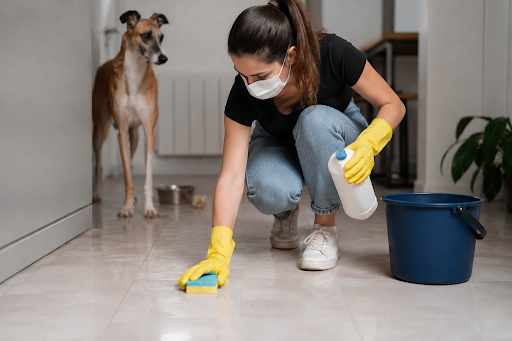
Dealing with parvovirus is one of the biggest challenges for any pet owner. Beyond the animal's suffering, a distressing question arises: how to ensure the home is safe again? Many wonder how to permanently kill the parvovirus in the environment , since this pathogen is known for its incredible resistance on surfaces and in soil.
Contamination doesn't only occur through direct contact between dogs, but also through objects, shoes, and clothing that carry the virus. Therefore, thorough cleaning of the area is essential. If you've experienced this problem or want to prepare your environment to welcome a new resident, understanding the science behind environmental decontamination is the first step towards safety.
In this guide, we'll explore the most effective methods, the right products, and the mistakes you should avoid. Learning how to kill the parvovirus in the environment is an act of care that preserves life and prevents this serious dog disease from continuing to spread throughout your yard or home.
Why is the parvovirus so resistant?
Before understanding how to kill the parvovirus in the environment , we need to know the enemy. Canine parvovirus is a non-enveloped virus. In practice, this means that it does not have an outer layer of fat that most common disinfectants can easily destroy. This characteristic gives the virus extreme resistance to temperature variations.
Studies indicate that, under favorable conditions, the virus can survive for months or even years in outdoor environments, such as gardens and lawns. For this reason, the removal of the viral load cannot be done haphazardly. A rigorous sanitary control protocol is necessary to neutralize the virus's protein structure, something far more complex than treating a simple canine giardiasis , for example.
Common mistakes when trying to find out how to kill the parvovirus in the environment.
Often, in their haste to clean everything, pet owners make mistakes that keep the area dangerous. The most frequent error is believing that simply using laundry detergent or common scented disinfectants will be enough to eliminate the virus. Unfortunately, these products only clean visible dirt, but leave the pathogen active and ready to infect the next pet.
Another serious mistake is not performing prior cleaning. Applying disinfectant directly to feces or urine inactivates the active ingredient in many products. Sanitizing kennels and homes requires that all organic matter be removed before applying the chemical agent. Without this step, you will only have the illusion that you have learned how to kill the parvovirus in the environment .
Best products for parvovirus disinfection
To successfully deep clean infected areas, you need substances that truly break down the virus's resistance. There have been important scientific advancements, such as the use of monoclonal antibodies in the direct treatment of animals, but in the environment, the focus is on disinfection chemistry. The most effective products are:
Bleach (Sodium Hypochlorite): This is the most affordable option. The recommended dilution is 1 part bleach to 30 parts water. It should act on the surface for at least 15 minutes.
Quaternary Ammonium Compound: Widely used in clinics, it is excellent for disinfecting metal surfaces or resistant fabrics, being less corrosive than chlorine;
High-Temperature Vaporizers: Extreme heat is a powerful ally. Machines that shoot steam above 120°C help eliminate pathogens in crevices where liquids can't reach.
Step-by-step guide to post-parvovirus cleanup
Knowing how to kill the parvovirus in the environment requires a structured process. Follow these steps to ensure maximum effectiveness and safety for other dogs in the area:
Mechanical removal: Remove all visible dirt and excrement. Use disposable paper towels and dispose of them in a sealed trash can.
Initial cleaning: Wash the area with water and neutral detergent. Rinse well;
Disinfectant application: Use a hypochlorite or quaternary ammonium solution. Ensure it covers the entire area, including wall corners.
Contact time: This is the secret to killing the parvovirus in the environment. Leave the product on for 20 minutes before rinsing.
Repetition: In cases of high viral load, repeat the process after 24 hours to ensure effectiveness.
Remember to discard items that cannot be properly disinfected, such as foam pet beds or rope toys. Your pet's safety is worth far more than these material items.
How long does the parvovirus survive in the environment?
A common question after cleaning is when it's safe to bring a new dog home. Even with a thorough cleaning, zero risk is difficult to achieve immediately, especially in areas with dirt or grass, where environmental decontamination is less efficient than on hard floors.
Experts suggest waiting at least 6 months to 1 year before introducing an unvaccinated puppy to a location with a history of parvovirus . If the new dog has already completed its vaccination protocol, the risk decreases drastically, but caution is still the best prevention strategy.
To complement your knowledge about care and safety, check out these articles:
Science and genetics as allies in prevention.
Now that you know how to kill the parvovirus in the environment , it's essential to look after your pet's health preventively. Dogs with strong immune systems and no genetic predispositions to debilitating diseases respond much better to any health challenge or viral infection.
Genetics plays a crucial role in how an animal's body deals with viruses and bacteria. Knowing your companion's profile allows you and your veterinarian to create personalized immunization and nutritional support strategies. Knowing how to kill the parvovirus in the environment is only one part of the care; the other is ensuring that your dog is genetically robust and well monitored.

Protection and science with petgenoma
Ensuring a pathogen-free environment is a profound demonstration of care and responsibility. By applying the correct techniques for killing the parvovirus in the environment , you interrupt the transmission cycle and protect the lives of many animals. petgenoma believes that the union between rigorous hygiene and advanced science is the best path to the longevity of your companion. Our tests offer clarity about your friend's health, and you can visit us at Av. Prof. Lineu Prestes, 2242 - Room 25 - Cidade Universitária, São Paulo SP to learn more. Also check out news and tips on our @petgenomabr and discover how genetics transforms animal well-being.
Essay
Petgenoma



