



The test revealed that Frida is a mix of Shih Tzu, Pug, and Chihuahua, and also exhibits behavioral characteristics. This helped me better understand her daily behavior.
Matheus Almeida
petgenoma client
My cart

Starting at R$ 590,00 get your Pet's genetic test.
Buy now

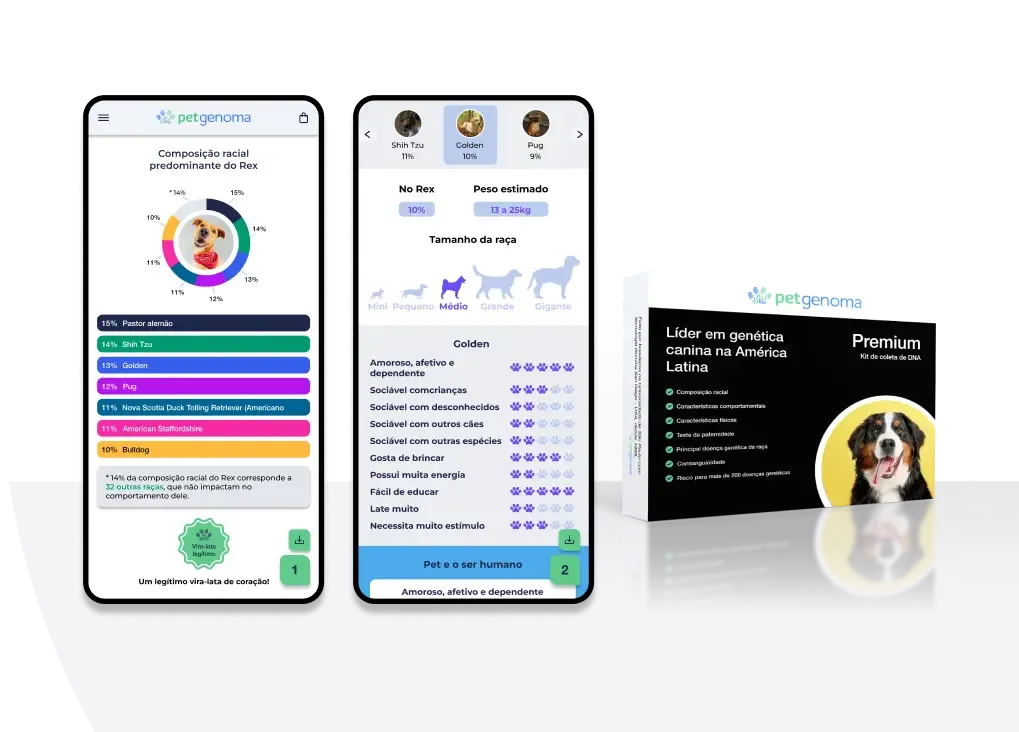
Starting at R$ 590,00 get your Pet's genetic test.
Buy now
Better understand your Pet's behaviors and traits
Buy now
Knowing your Pet's genetics can help you prevent diseases so they can live better
Buy now
The best technology to deliver your Pet's most complete genetic result.
Buy now
 Dog
Dog
 Cat
Cat
Genetic report based on data from more than 250 breeds. 45 breeds
Learn more Learn more
Technology used by veterinarians, a report covering more than 300 diseases. 90 diseases.
Learn more Learn more
Understand your Pet's predisposition and help them live a longer, better life. Find out!
Learn more
How does your react to different medications? Personalize treatments safely.
Learn more Learn more
Discover your Pet's predisposition to obesity and help them live a lighter, longer, healthier life.
Learn moreGet to know your Pet even better. Every discovery brings us closer to a happier, longer, healthier life for your Pet.
Dog
Cat
R$ 790,00
 Breed composition panel covering more than 250 breeds
Kinship panel
Breed behavioral traits panel
Inbreeding panel
Panel covering more than 300 diseases
Pharmacogenetics panel
Physical traits panel
Oncological risks panel
Obesity risk analysis
Breed composition panel covering more than 250 breeds
Kinship panel
Breed behavioral traits panel
Inbreeding panel
Panel covering more than 300 diseases
Pharmacogenetics panel
Physical traits panel
Oncological risks panel
Obesity risk analysis
R$ 690,00
Breed composition panel covering more than 250 breeds
Kinship panel
Breed behavioral traits panel
Inbreeding panel
Panel covering more than 300 diseases
Pharmacogenetics panel
Physical traits panel
 Oncological risks panel
Obesity risk analysis
Oncological risks panel
Obesity risk analysis

R$ 590,00
Breed composition panel covering more than 250 breeds
Kinship panel
Breed behavioral traits panel
Inbreeding panel
Panel covering more than 300 diseases
Pharmacogenetics panel
Physical traits panel
Oncological risks panel
Obesity risk analysis
R$ 690,00
Breed composition panel covering more than 45 breeds
Kinship panel
Breed behavioral traits panel
Inbreeding panel
Panel covering more than 90 diseases
Pharmacogenetics panel
Physical traits panel
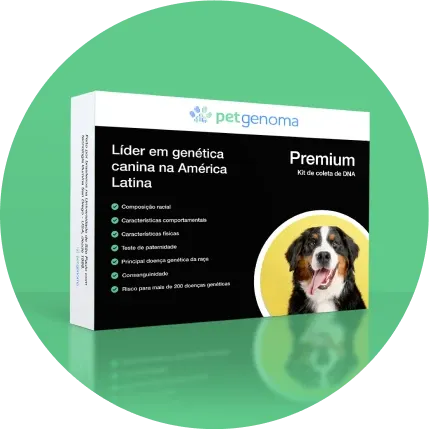
Receive the petgenoma genetic kit at your home
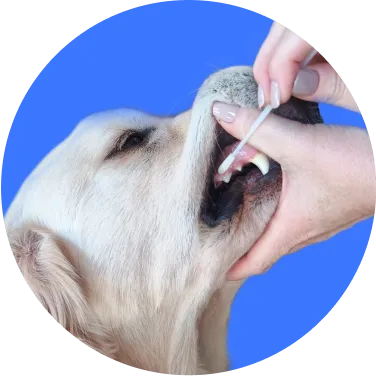
Quick collection using an oral swab
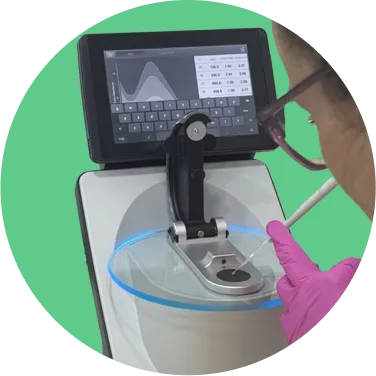
Scientific analysis at our laboratory, located at USP

Receive the petgenoma genetic kit at your home
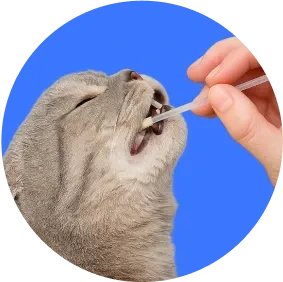
Quick collection using an oral swab
Scientific analysis at our laboratory, located at USP
Your Pet might be more Brazilian than you think!

Embark on a fun experience full of surprises about your best friend's origin.

Discover which breeds make up your mixed-breed the most and how close they are to the Original Brazilian Mutt

On top of that, you'll have exciting discoveries throughout this journey
Starting at R$ 590,00 get your Pet's genetic test.
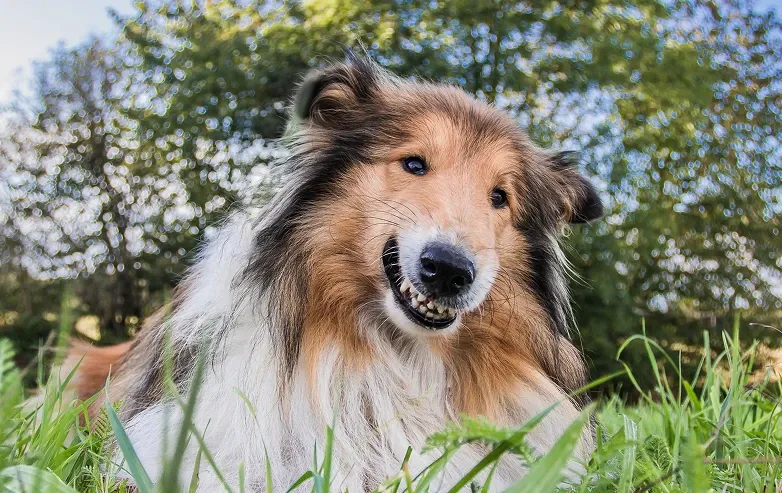
At petgenoma, you get more information about your Pet than anywhere else. petgenoma customers get the data they need to improve their Pets' health and well-being.
 You do the sample collection
petgenoma sends you everything you need to collect the sample with ease. Our process is simple and painless.
 Scientific precision
Our scientists are highly qualified and competent professionals in the field. We apply rigorous analysis to every sample, so you can be sure of getting the most accurate results possible.
 A result that makes a difference
When you test with petgenoma, you get more than curiosities: you learn how to improve your Pet's well-being, from preventive care to changes in diet and lifestyle.
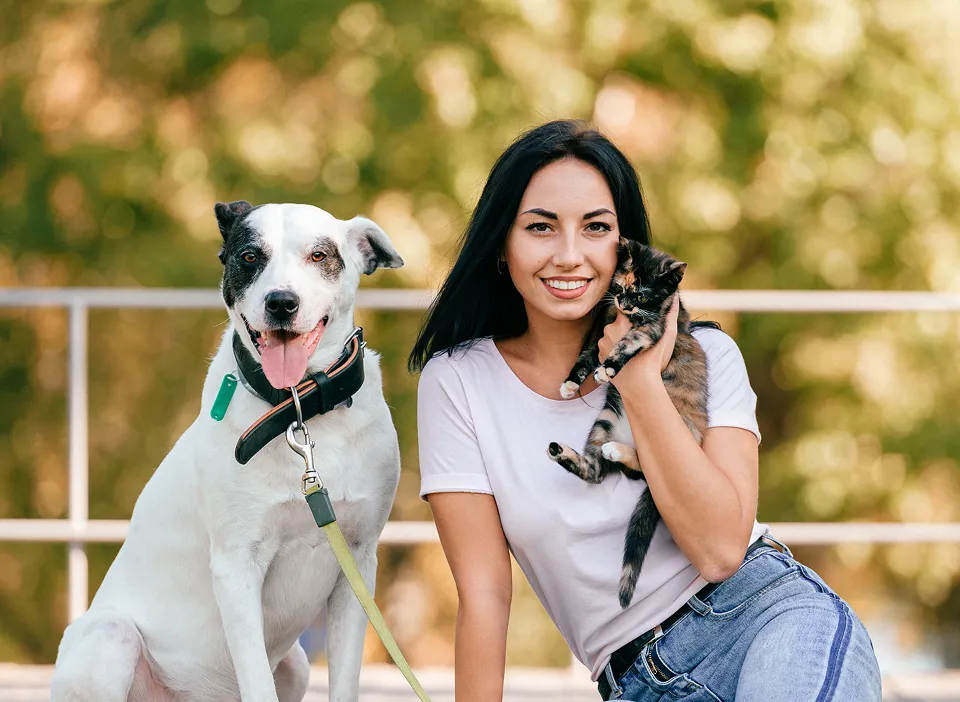
Every Pet is different, and you need to know the details that help you connect with them!
petgenoma builds that bridge between you and your Pet.

With a degree in Biology and a Master's, PhD, and postdoctoral degree in Canine Genetics from UFRGS, Fabiana has more than 20 years of experience in higher education and nearly 10 years in Genetic Counseling for purebred dog breeders. Today, she is coordinator of the genetics and quality control unit and scientific director at petgenoma.
Mother of two humans and three dogs, she values simple moments: relaxing with a good book beside her furry companions while her son builds a LEGO condo or tends to the plants inspires her to make science accessible and bring knowledge to Pet lovers.
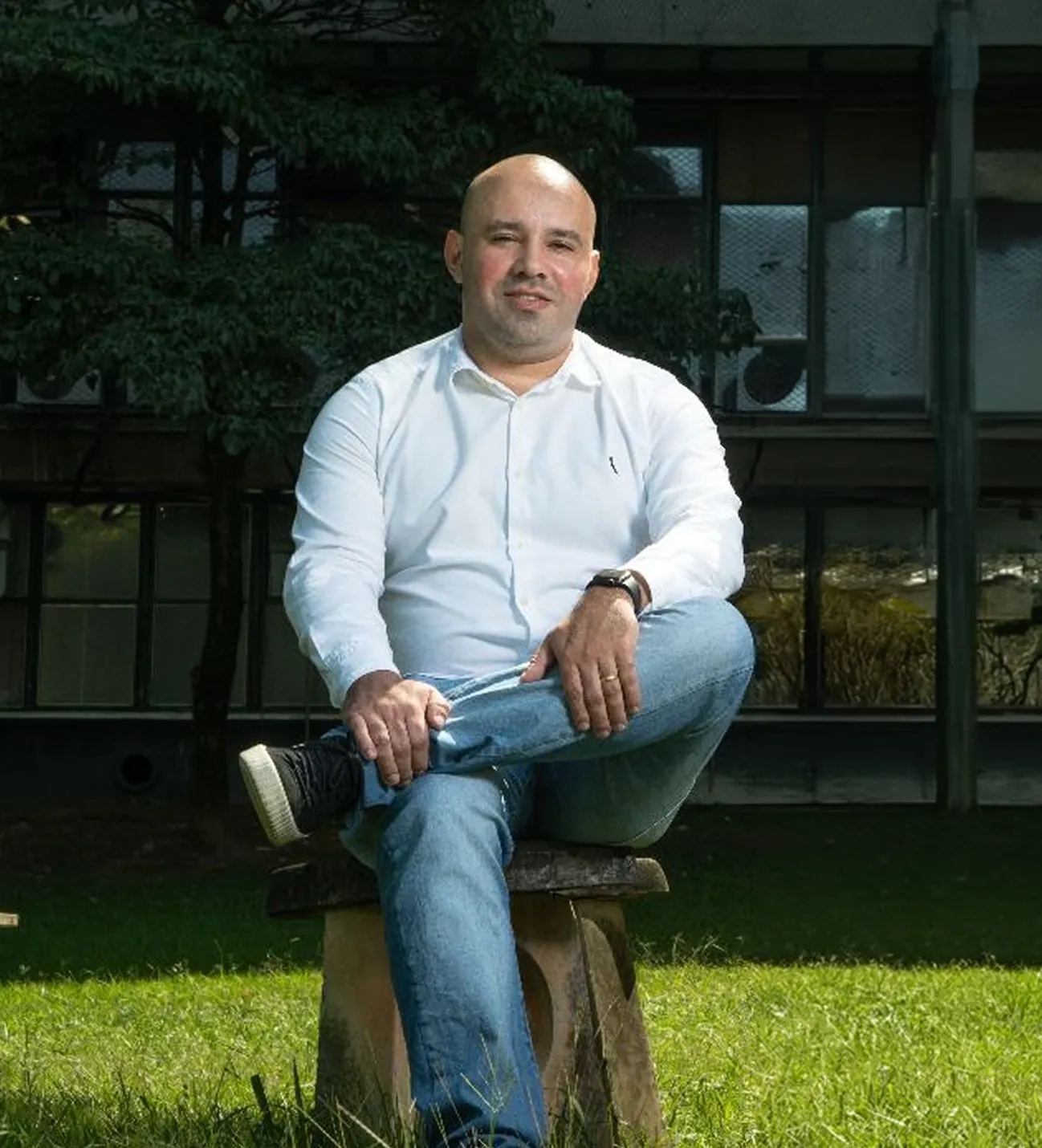
With a technology degree from FIAP and a specialization in Software Engineering from USP, he has more than 10 years of experience in the tech industry and was recognized as one of the sector's leading references in 2022. Former CTO of Menu (acquired by Ambev), he is currently CTO and partner at petgenoma. An AI enthusiast, he seeks to transform the health and quality of life of animals and people through technology.
Born in a small town in Minas Gerais, father of two girls and Nala's tutor, he has always been a curious innovation enthusiast, taking electronics apart and putting them back together since childhood. Haven't we all?
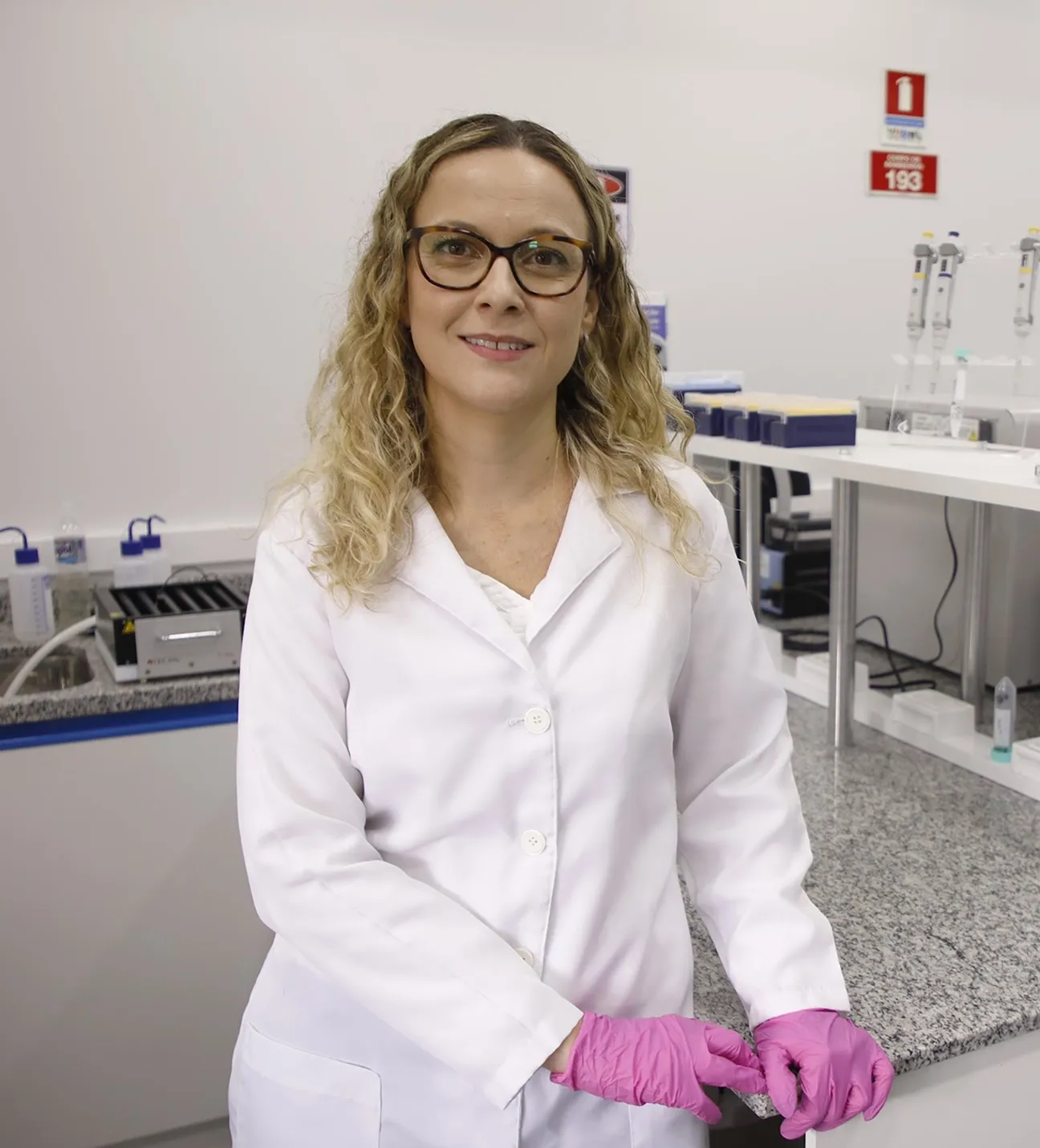
With a degree in Biology (both teaching and bachelor's tracks) and a Master's and PhD in Genetics, all from UFRGS. After many years working with Human Genetics, she took on the challenge of leading Petgenoma's laboratory — after all, molecularly speaking, genetics is the same.
Beyond her scientific rigor, Paula is known for valuing lighter moments. She has already completed 2 marathons (not so light after all). She loves sharing a beer and good conversation with friends, showing that balance between science and leisure is essential for creativity and focus.
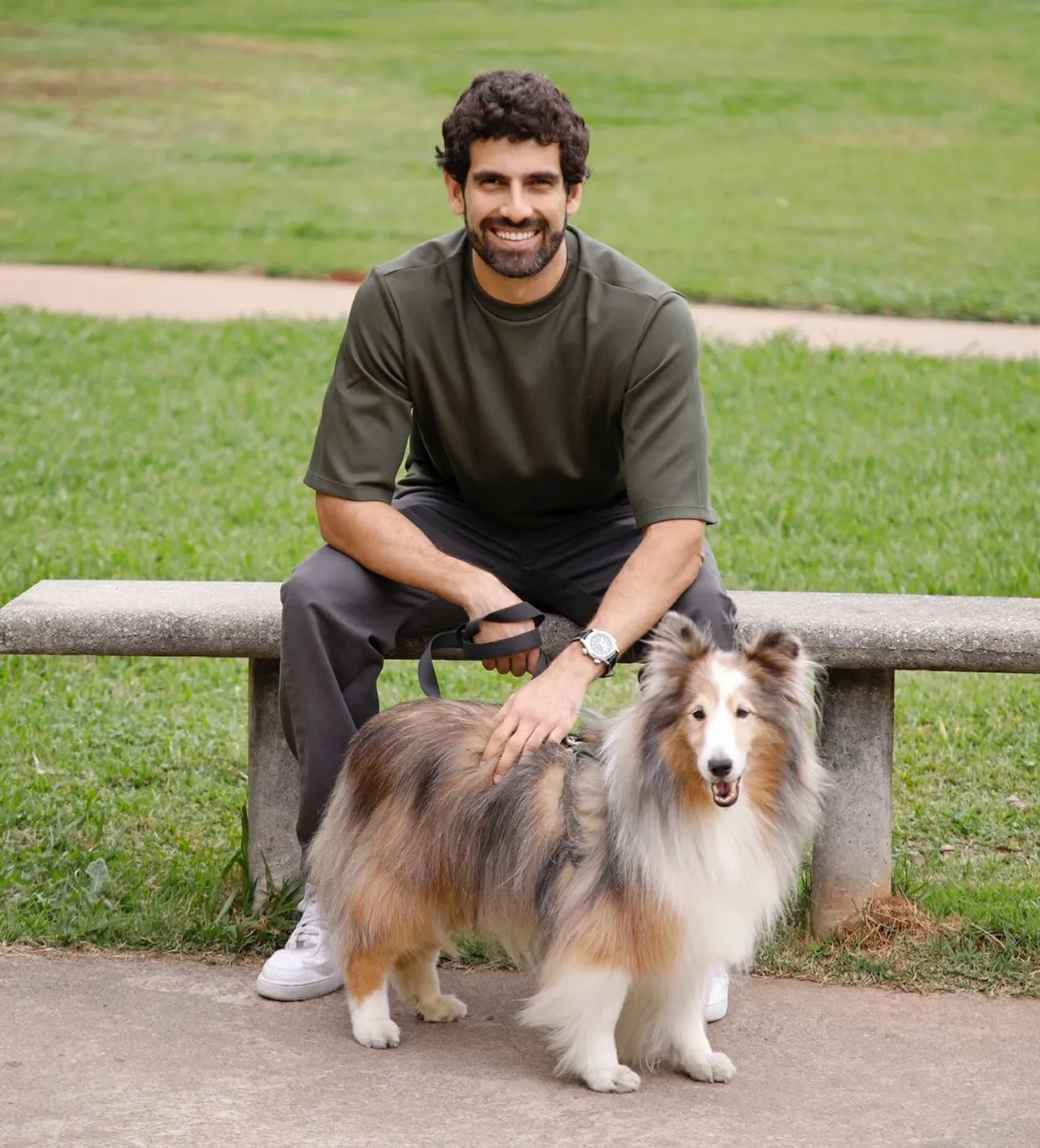
With a degree in Business Administration from PUC-Rio and in Neuroscience from Instituto Singularidade, he has more than 18 years of experience in strategy and business. He was Director of Strategy at Pearson and General Manager at Playkids.
An animal lover deeply affected by the premature loss of a dog in his youth, Eduardo founded petgenoma with the goal of revolutionizing the pet market in Brazil, contributing to the health of our furry friends, veterinary clinical practice, and responsible breeding/adoption.

With a degree in Animal Science from UFPel and a PhD in Animal Genetic Improvement from UFRGS. She is currently a researcher in the MegaGen-UFRGS group, studying cattle, pigs, and dogs. She was invited to join the Petgenoma team, where she combines her passion for genomics and data science to uncover the ancestry and inbreeding of our four-legged friends.
Dari never stops! Between unraveling genetics, caring for her daughters Cecília and Mariana, her dogs Milonga, Maitê, Kely, and Mia, and her cats Tigra, Morgana, and Olga, she could really use a clone to keep up with it all!
Stay up to date with the latest news from Petgenoma.


Check the answers to our most frequently asked questions.
In petgenoma, we extract DNA from cells of the pet's buccal epithelium. Since collecting buccal epithelium is very simple, it can be done by the owner themselves using swabs (a type of cotton swab) sent to their home. These swabs should be passed between the dog's gum and cheek, following a detailed, yet simple, step-by-step guide that is sent along with the collection material to the owner's home. However, the interpretation of the results, followed by clinical guidance, must always be performed by a veterinary professional.
DNA is a molecule that doesn't change throughout life; that is, the same DNA we are born with will be the same in old age. In this sense, at any age, a genetic test will show the same result, but it's important to consider that the younger the pet, the more benefits are derived from the knowledge generated by a genetic test. This is because predicting a predisposition to a disease often allows for intervention to delay or mitigate it, as well as guiding couples towards the birth of healthy puppies. Even so, we do not recommend collecting samples from puppies before 15 days of age, for the sole reason that the "baby" needs to be without nursing for at least one hour for the sample to be collected, which can be an unnecessary stress factor.
There is absolutely no problem in collecting samples from a pregnant female, unless the dog becomes stressed during the collection process, which is not usually common. However, the nursing dog needs to be kept away from the puppies for 1 hour to avoid contamination due to licking the "babies". If the puppies are no longer very young, and this is possible, there is no interference with the genetic test.
Unfortunately, not yet, despite the great importance of these diseases for canine health. Many research groups worldwide are working on the genetics of dysplasia, but even in the most developed countries, there is no informative genetic test available on the market. At petgenoma, we are attentive to scientific advances, we also conduct our own research, and we will certainly incorporate these assessments into our products as soon as scientific evidence becomes available.
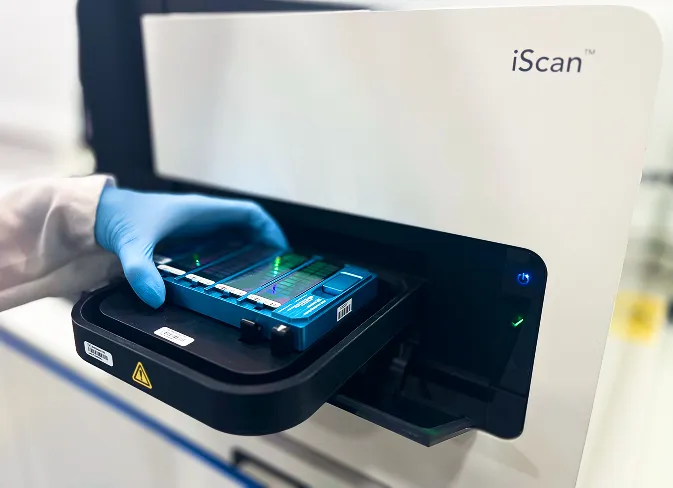
We don't use only PCR for genetic analysis. The methodology used is called 'DNA probe hybridization', 'microarray', or 'DNA chip', using equipment and a platform from the company Illumina. This is the first laboratory based in Brazil to use this technology, which is also used by large and renowned laboratories in the developed world. However, analyzing the dog's DNA requires several days in the laboratory due to the complexity of the technique, in addition to bioinformatics analyses, which also demand considerable time.
Hybridization technology using DNA probes, microarrays, or DNA chips is capable of analyzing hundreds or even thousands of genes in a single run. However, the laboratory cost for analyzing a few genes is the same as for extensive research, which is why petgenoma does not perform customized panels for specific breeds or clients.
In addition to supporting a 100% Brazilian company, you will have access to a complete team of veterinarians and geneticists ready to answer all your questions, both before purchasing our analyses and after receiving the results for your dogs. Other important points are our technical team's knowledge of the characteristics of the most common breeds in our territory and the ease of sending samples, as our logistics are super simplified and efficient, covering the entire national territory.
The data generated by DNA probe hybridization technology, microarray, or DNA chip has a 99.6% accuracy rate, allowing for high confidence in the results. For disease and trait analyses, the result generated in the laboratory is directly shown in the report, eliminating the need for bioinformatics analyses to finalize it. On the other hand, the ancestry or racial composition report will generate data according to the available breed database. Initially, our database already includes the main breeds raised in Brazil, and therefore, the degree of confidence in our racial analyses is already quite high.
The "Identificação de raças" test from petgenoma will compare your pet's DNA with DNA from our database and determine the proportion of each breed present in your dog or cat. For purebred pets, this analysis should indicate 100% (or at least 70%) of the pedigree breed, while for mixed breeds or SRDs (No Defined Breed), it will indicate which breeds make up the pet's genome and in what proportion. Breeds present in high proportions can explain various behaviors and predispositions to diseases in pets, and therefore, knowledge of breed composition can help owners improve their relationship with their animals.
Without prejudice to any applicable legal provisions, we emphasize that refunds and/or returns will only be processed if the collection kits are returned with the sterile packaging intact. Please contact us so that we can proceed with the reverse logistics of returning the kit, which will occur at no additional cost to the customer through our authorized operator. If the samples are processed and the laboratory results prove inconclusive or technically unfeasible due to a small amount of analyzable genetic material, we will send a new collection kit at no additional cost to the same address as the first shipment.
Genomic analyses performed in any laboratory worldwide can generate a small number of inconclusive results. An inconclusive result occurs when it is not possible to evaluate and provide a result for that specific genetic variant of the pet, and it does not mean that the pet has a problem with this gene. The number of inconclusive results is related to the quality of the sample: when the swab does not have enough sample, or has not been dried for long enough, or even takes too long to be sent to the laboratory, the number of inconclusive results is higher. At petgenoma, we do not issue a report when the number of inconclusive results is greater than 3% of the variants tested, or when a disease important to the breed has an inconclusive result. In these cases, a recollection is requested, and the evaluation is repeated. Reports with less than 3% of inconclusive results for very rare diseases, and which are not described for the pet's breed, are normally released, without the conditions that gave the inconclusive result.
Absolutely! petgenoma strongly recommends that the results be shared with a veterinary professional in order to provide the best clinical management based on the findings! This set of actions can save your pet's life! And if your pet's veterinarian is not yet a partner, we will be happy to assist you through our WhatsApp channel!

All fields are required