Pseudo-hemophilia
30/04/2024
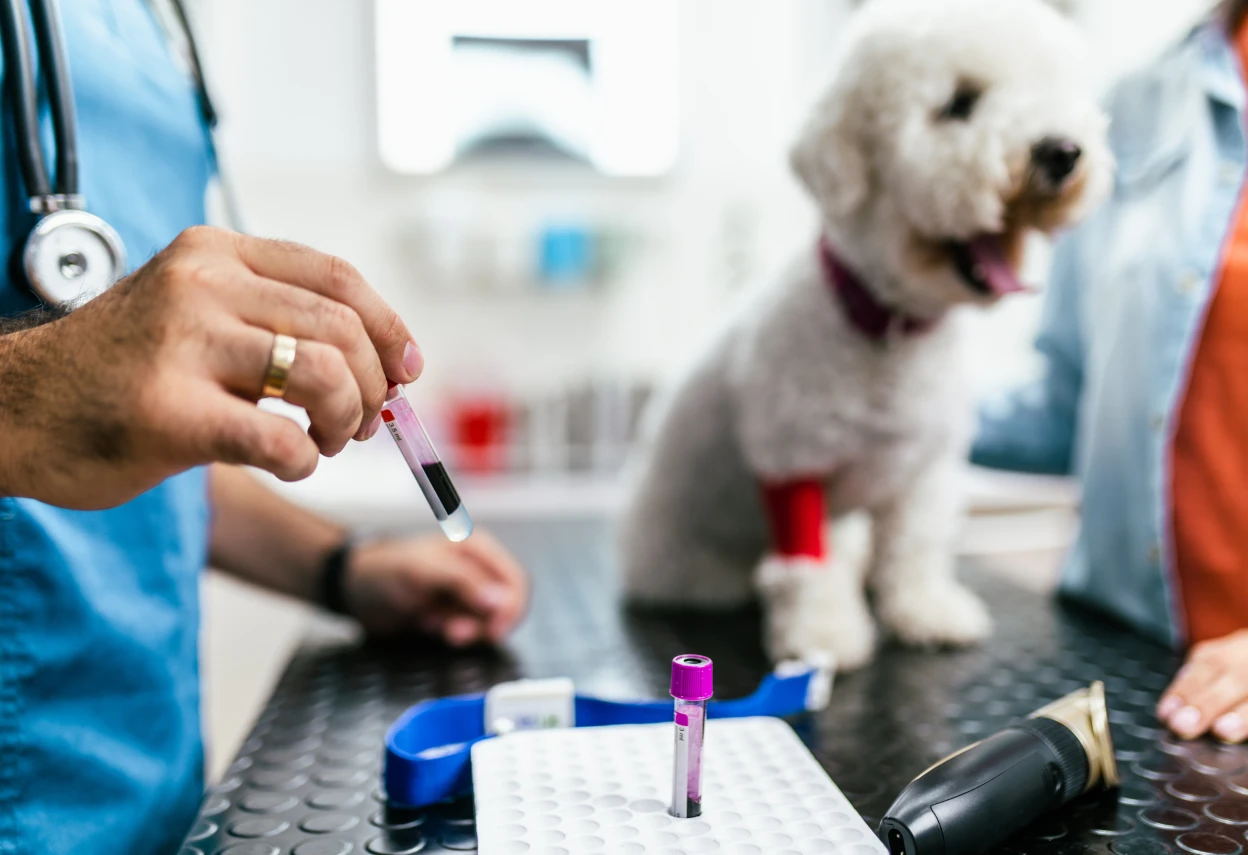
"Hemophilia" is the general term used to describe a coagulation problem that prevents the individual from producing a clot, so that when there is a cut or injury, the animal cannot stop the bleeding. True hemophilia (type A or B, for example) is a very serious disease, and dogs with these problems are usually detected in puppyhood, as any bump causes the hematoma to spread, and any small cut does not heal. Even so, even for these serious diseases, there are cases that are not detected until the first surgery, such as castration, for example. This is an extremely critical moment, when the chance of death for this dog is very high, especially if the clinical staff is not aware of the condition. Hemophilia A and B are quite rare and occur in several breeds.
However, far more frequent than these serious diseases are the group of conditions known as "pseudohemophilias." These coagulation disorders are so called because they are milder coagulation problems with less impact on the dog's health. Among these problems are Von Willebrand diseases, which reduce the dog's clotting ability. Depending on the type of Von Willebrand (there are three), this reduction is so mild that it will only be noticeable during surgery.
Therefore, especially for breeds in which this class of diseases is common, it is of great importance that the owner and the veterinarian take steps to perform genetic testing while the dog is still a puppy, such as in Bernese Mountain Dogs and Dobermans. This prior knowledge can save the dog's life during surgery, as the clinical team, aware of the deficiency, can prepare for a safe procedure. petgenoma performs tests for various types of coagulation problems, including von Willebrand disease, in the PREMIUM product which you can see here.
Fabiana Michelsen de Andrade
Geneticist specializing in small animals.
Biologist, Master's and PhD from UFRGS.
Postdoctoral studies in Cellular and Molecular Biology (United Kingdom) and in Animal Genetic Improvement (UFRGS)
Founding partner and scientific director of petgenoma



