Predominant breed
composition of Garfield
A unique Pet full of stories!
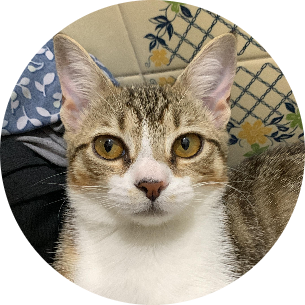
- 19% Siamese
- 10% Bengal
- 9% Scottish Fold/Straight
- 8% British Shorthair
- 6% Eastern
- 6% Maine Coon
- 5% Russian Blue
37% of Garfield's breed composition corresponds to 15 other breeds, which don't impact their behavior.

A true
mixed breed at heart!

Learning about the expected behavior for each breed your Pet descends from can help you understand them better!
- In this report you'll see in-depth information about the behavior trends of the main breeds that make up your Pet.
- Remember that the higher the percentage in the breed composition, the greater the chances this information reflects their behavior.
- We suggest paying closer attention to the 3 breeds with the highest share in your Pet.
- All descriptions refer to the expected averages for each breed, but your Pet is always unique.
Other breeds of Garfield

The breeds shown below are not necessarily signs of recent mixing, since breed percentages below 5% don't indicate certain ancestry.
When a large number of breeds is detected at minimal percentages, it's more likely the result of many generations of mixed-breed cats pairings, with no purebred cat entering the pedigree.
The breeds of Garfield
See the information we prepared about the
3 main breeds that make up Garfield:
- Affection towards family
- Reaction to strangers and visitors
- Relationship with other animals
- Energy, playfulness and games
- Intelligence, curiosity, and mental stimulation.
- Vocal and non-vocal communication
- Trainability and ability to learn commands
- Adapting to new environments
Siamese

Bengal
Scottish Fold/Straight
Breed traits and abilities are rated on a scale from 1 to 5, where 1 means low and 5 means high.

Siamese
19%
Bengal
10%
Scottish Fold/Straight
9%
Garfield
19%Siamese
- Affection towards family
- Reaction to strangers and visitors
- Relationship with other animals
- Energy, playfulness and games

- Intelligence, curiosity, and mental stimulation.
- Vocal and non-vocal communication
- Trainability and ability to learn commands
- Adapting to new environments
Pet and humans
Affection towards family
The Siamese cat is not content with a silent presence. It wants to be intensely involved in the lives of those around it. With adults, it forms deep, almost obsessive bonds. It follows its owner around the house, participates in routines, and demands attention. With children, it can be playful and a companion, as long as its space is respected. With the elderly, its constant and affectionate company can be a balm, although its energy requires a certain willingness for frequent interactions.
Reaction to strangers and visitors
Don't expect a timid reception from a Siamese cat. He observes, analyzes, and vocalizes. He may approach with curiosity or maintain a strategic distance, depending on the visitor's energy and behavior. He is not aggressive, but neither is he indifferent. His behavior reveals a keen social intelligence, leading him to choose with whom to interact.
Pet and other animals
Relationship with other animals
Despite their dominant personality, Siamese cats can get along well with other animals, especially if socialized from a young age. They enjoy playing, competing for attention, and even teaching boundaries. They can become jealous, but they can also form affectionate bonds with dogs or other sociable cats, provided the environment fosters coexistence and harmony.
Pet's daily life
Energy, playfulness and games
Generally, the Siamese cat is an eternal kitten. It runs, climbs, and hunts imaginary toys. It needs constant stimulation, interactive toys, shelves, and challenges. Its energy is not only physical but also emotional. It plays with its gaze, its meow, its presence. It's a cat that transforms any corner of the house into a stage for its interactions.
Intelligence, curiosity, and mental stimulation.
Few breeds rival the Siamese in terms of intelligence. They learn commands, solve problems, and open doors and windows. Their curiosity is almost scientific: they investigate objects, observe movements, and test limits. They need mental challenges, such as puzzles, games, and changes in environment. Without these, they can become bored and even destructive.
Vocal and non-vocal communication
The Siamese cat talks. And it talks a lot. Its meows vary in tone, intensity, and intention. It narrates its day, complains, praises, calls. But it also communicates with its body through its fixed gaze, gentle touch, and strategic positioning. It's a cat that doesn't go unnoticed and demands to be heard.
Trainability and ability to learn commands
Training a Siamese cat is very similar to teaching a dog tricks, except that it will only do what it wants and when it wants. It learns quickly, responds to commands, can be taught to fetch objects, wear a collar, and perform tricks. But it requires respect, attention, and positive reinforcement. Its intelligence does not accept impositions; it only flourishes through partnership and respect for the feline's timing.
Adapting to new environments
The Siamese cat is highly sensitive and attached to its territory and routine. Abrupt changes can cause discomfort, and it may react with intense vocalizations or anxious and dysfunctional behaviors. However, when the transition is made with patience, environmental enrichment, and attention to its need for security and predictability, it can adapt. The constant presence of its owners and familiar objects is fundamental for it to feel welcomed and to regain its vibrant and sociable personality.

Inbreeding Results
Pet name: Garfield
Guardian name: Cliente Petgenoma
Registered by: Cliente Petgenoma
Sex: Male
Breed: Sem raça definida e mix (vira-lata, SRD, mestiço)
Result released on: 13/09/25
Born on: 29/6/2023
Birth country: Brasil
Birth state: São Paulo
Pedigree registration No.: -
Microchip number: -
Sample code: 90103764588065
Inbreeding Results
Red Increased risk
Yellow Intermediate risk
Green No risk
Garfield's inbreeding
Pet name
Garfield
Risk
Explanation
Since your pet has a lower inbreeding degree than the average for cats in general, their risk is considered LOW
Inbreeding, or consanguinity, happens when cats with some degree of kinship are mated, producing an offspring called "inbred".
Garfield's inbreeding degree
Current average inbreeding degree of cats in general
Inbreeding, or consanguinity, happens when cats with some degree of kinship are mated, producing an offspring called "inbred".

Inbreeding
The closer the relationship between the parents, the higher the inbreeding value of this offspring, which can bring several health risks, such as:
- higher risk of developing various genetic diseases
- higher chances of cancer, especially at younger ages (up to 6 to 8 years old)
- predisposition to diseases related to immune system malfunction (dermatitis and food allergies, for example)
- lower reproductive ability, with smaller litters and difficulty producing offspring
- decreased life expectancy of your cat
Most scientific references on the harmful role of inbreeding exist only for dogs. Even so, here are two scientific articles published for cats:
- Erofeeva MN (2022). Inbreeding Coefficient and Distance in MHC Genes of Parents as Predictors of Reproductive Success in Domestic Cat. Available at https://doi.org/10.3390/ani12020165
- Casal ML (2022). Feline Fertility Consequences of inbreeding and implications for reproductive fitness. Available at https://doi.org/10.1177/1098612X221118755
Below you'll find some scientific references on the effect of excessive inbreeding in dogs:
- Leroy, G. e cols (2015). Inbreeding impact on litter size and survival in selected canine breeds. Available at https://doi.org/10.1016/j.tvjl.2014.11.008
- Ubbink, GJ e cols (1992). The relationship between homozygosity and the occurrence of specific diseases in Bouvier Belge des Flandres dogs in the Netherlands: Inbreeding and disease in the bouvier dog. Available at https://doi.org/10.1080/01652176.1992.9694350
- Ujvari, B e cols (2018). Genetic diversity, inbreeding and cancer. Available at https://doi.org/10.1098/rspb.2017.2589
- Urfer, SR e cols (2020). Lifespan of companion dogs seen in three independent primary care veterinary clinics in the United States. Available at https://doi.org/10.1186/s40575-020-00086-8
So, if your Pet's marker shows a high inbreeding value, it means they have increased health risks.
if you're the guardian, be prepared for the risks associated with a high value. It's worth planning, for example, check-ups that start earlier in your Pet's life and happen more often, since these exams can detect several diseases early.
if you're a breeder, pay close attention to your Pet's inbreeding value before breeding them. It's extremely important to lower this value in the litter. To do so, we recommend using our litter inbreeding prediction tool before choosing the pair to be mated. (Get in touch with our team to learn the pricing for this essential service, designed specifically to meet your needs efficiently.)
Keep in mind that the inbreeding value reported by the genetic test (called "genomic COI") is different from the value estimated from pedigree data!
A cat can have a low pedigree COI and still have a high genomic COI! One reason this happens is some error or fraud in the registration of an ancestor of your cat, but even in fully correct pedigrees, this possibility still exists.
The discrepancy between pedigree COI and genomic COI in correct pedigrees happens due to high inbreeding that occurred many generations ago, which remains "marked" in your cat's DNA even if no inbred matings have occurred in recent generations. In these cases, the risk associated with the elevated COI won't be as obvious.
Pedigree inbreeding
Pet name: Garfield
Guardian name: Cliente Petgenoma
Registered by: Cliente Petgenoma
Sex: Male
Breed: Sem raça definida e mix (vira-lata, SRD, mestiço)
Result released on: 13/09/25
Born on: 29/6/2023
Birth country: Brasil
Birth state: São Paulo
Pedigree registration No.: -
Microchip number: -
Sample code: 90103764588065
Pedigree inbreeding
Red Increased risk
Yellow Intermediate risk
Green No risk
Inbreeding by generation for Garfield
The chart below shows when matings between close relatives occurred.
Recent Inbreeding that occurred in the last 3 generations of the pedigree.
Medium Inbreeding that occurred between the 6th and 12th generations of the pedigree.
Old Inbreeding that occurred more than 25 generations ago.
The higher the inbreeding in recent generations, the greater the risks for cat themselves and for the offspring of future generations.
Pharmacogenetic Results
Pet name: Garfield
Guardian name: Cliente Petgenoma
Registered by: Cliente Petgenoma
Sex: Male
Breed: Sem raça definida e mix (vira-lata, SRD, mestiço)
Result released on: 13/09/25
Born on: 29/6/2023
Birth country: Brasil
Birth state: São Paulo
Pedigree registration No.: -
Microchip number: -
Sample code: 90103764588065
Pharmacogenetic Results
Red Increased risk
Yellow Intermediate risk
Green No risk
Multiple drugs resistance (MDR)
Condition name
Multiple drug intolerance
Risk degree
Result possibilities
II / ID / DD
Your Pet's result
II
No. of variants found
nenhuma
Breeding attention
Your Pet does not have multiple drug intolerance.
What does this mean?
Your cat will not experience adverse reactions when using some medications. In other words, the list of medications listed in 'details' is a safe list to use.
Disease Results
Pet name: Garfield
Guardian name: Cliente Petgenoma
Registered by: Cliente Petgenoma
Sex: Male
Breed: Sem raça definida e mix (vira-lata, SRD, mestiço)
Result released on: 13/09/25
Born on: 29/6/2023
Birth country: Brasil
Birth state: São Paulo
Pedigree registration No.: -
Microchip number: -
Sample code: 90103764588065
Disease Results
Red Increased risk
Yellow Intermediate risk
Green No risk
Diseases that may manifest in Garfield
Diseases that may manifest in Garfield

Each variant analyzed had its risk associated with a disease in different breeds, but its effect in mixed-breed dogs is still unknown. So, if your cat has the disease variants, the Risk degree they have of developing them isn't a certainty, but it does require attention.
| Cardiovascular | |||||||
Hypertrophic Cardiomyopathy - HCM (variant 1)
Hypertrophic Cardiomyopathy - HCM (variant 1)
Result CG - 1 cópia

|
CC / CG / GG | 1 cópia | CG | Your pet does not have an increased risk; it is only a carrier of the variant. | Details | ||
|
Hypertrophic Cardiomyopathy - HCM (variant 2)
Hypertrophic Cardiomyopathy - HCM (variant 2)
Result CC - nenhuma
|
CC / CT / TT | nenhuma | CC | Your pet is not at increased risk. | Details | ||
|
Hypertrophic cardiomyopathy - HCM (variant 3)
Hypertrophic cardiomyopathy - HCM (variant 3)
Result CC - nenhuma
|
CC / CT / TT | nenhuma | CC | Your pet is not at increased risk. | Details | ||
|
Hypertrophic Cardiomyopathy - HCM (variant 4)
Hypertrophic Cardiomyopathy - HCM (variant 4)
Result GG - nenhuma
|
GG / GC / CC | nenhuma | GG | Your pet is not at increased risk. | Details | ||
|
Hypertrophic cardiomyopathy - HCM (variant 5)
Hypertrophic cardiomyopathy - HCM (variant 5)
Result CC - nenhuma
|
CC / CT / TT | nenhuma | CC | Your pet is not at increased risk. | Details | ||
| Dermatological | |||||||
|
Acrodermatitis enteropathica
Acrodermatitis enteropathica
Result CC - nenhuma
|
CC / CG / GG | nenhuma | CC | Your pet is not at increased risk. | Details | ||
|
Hair shaft dysplasia (variant 1)
Hair shaft dysplasia (variant 1)
Result II - nenhuma
|
II / ID / DD | nenhuma | II | Your pet is not at increased risk. | Details | ||
|
Hair shaft dysplasia (variant 2)
Hair shaft dysplasia (variant 2)
Result II - nenhuma
|
II / ID / DD | nenhuma | II | Your pet is not at increased risk. | Details | ||
|
Sebaceous gland dysplasia
Sebaceous gland dysplasia
Result GG - nenhuma
|
GG / GA / AA | nenhuma | GG | Your pet is not at increased risk. | Details | ||
|
Hypohidrotic ectodermal dysplasia
Hypohidrotic ectodermal dysplasia
Result G - nenhuma
|
G / A | nenhuma | G | Your pet is not at increased risk. | Details | ||
|
Junctional epidermolysis bullosa (variant 1)
Junctional epidermolysis bullosa (variant 1)
Result II - nenhuma
|
II / ID / DD | nenhuma | II | Your pet is not at increased risk. | Details | ||
|
Junctional epidermolysis bullosa (variant 2)
Junctional epidermolysis bullosa (variant 2)
Result CC - nenhuma
|
CC / CT / TT | nenhuma | CC | Your pet is not at increased risk. | Details | ||
|
Ehlers-Danlos syndrome (var. 1)
Ehlers-Danlos syndrome (var. 1)
Result DD - nenhuma
|
DD / DI / II | nenhuma | DD | Your pet is not at increased risk. | Details | ||
|
Ehlers-Danlos syndrome (var. 3)
Ehlers-Danlos syndrome (var. 3)
Result TT - nenhuma
|
TT / TA / AA | nenhuma | TT | Your pet is not at increased risk. | Details | ||
|
Ehlers-Danlos syndrome (var.2)
Ehlers-Danlos syndrome (var.2)
Result TT - nenhuma
|
TT / TG / GG | nenhuma | TT | Your pet is not at increased risk. | Details | ||
|
Ehlers-Danlos syndrome (var.4)
Ehlers-Danlos syndrome (var.4)
Result II - nenhuma
|
II / ID / DD | nenhuma | II | Your pet is not at increased risk. | Details | ||
| Development | |||||||
|
Frontonasal Dysplasia
Frontonasal Dysplasia
Result II - nenhuma
|
II / ID / DD | nenhuma | II | Your pet is not at increased risk. | Details | ||
|
Chediak-Higashi Syndrome
Chediak-Higashi Syndrome
Result DD - nenhuma
|
DD / DI / II | nenhuma | DD | Your pet is not at increased risk. | Details | ||
| Endocrine | |||||||
|
Congenital adrenal hyperplasia
Congenital adrenal hyperplasia
Result AG - 1 cópia
|
AA / AG / GG | 1 cópia | AG | Your pet does not have an increased risk; it is only a carrier of the variant. | Details | ||
|
Hypogonadotropic hypogonadism
Hypogonadotropic hypogonadism
Result CC - nenhuma
|
CC / CT / TT | nenhuma | CC | Your pet is not at increased risk. | Details | ||
|
Congenital hypothyroidism
Congenital hypothyroidism
Result CC - nenhuma
|
CC / CT / TT | nenhuma | CC | Your pet is not at increased risk. | Details | ||
| Hematological | |||||||
|
Leukocyte adhesion deficiency, type I
Leukocyte adhesion deficiency, type I
Result II - nenhuma
|
II / ID / DD | nenhuma | II | Your pet is not at increased risk. | Details | ||
|
Erythrocyte pyruvate kinase deficiency - PKdef
Erythrocyte pyruvate kinase deficiency - PKdef
Result GG - nenhuma
|
GG / GA / AA | nenhuma | GG | Your pet is not at increased risk. | Details | ||
|
Factor XII deficiency (variant 1)
Factor XII deficiency (variant 1)
Result II - nenhuma
|
II / ID / DD | nenhuma | II | Your pet is not at increased risk. | Details | ||
|
Factor XII deficiency (variant 2)
Factor XII deficiency (variant 2)
Result GG - nenhuma
|
GG / GC / CC | nenhuma | GG | Your pet is not at increased risk. | Details | ||
|
Hemophilia B / Factor IX deficiency (variant 1)
Hemophilia B / Factor IX deficiency (variant 1)
Result GG - nenhuma
|
GG / GA / AA | nenhuma | GG | Your pet is not at increased risk. | Details | ||
|
Hemophilia B / Factor IX deficiency (variant 2)
Hemophilia B / Factor IX deficiency (variant 2)
Result CC - nenhuma
|
CC / CT / TT | nenhuma | CC | Your pet is not at increased risk. | Details | ||
|
Hemophilia C / Factor XI deficiency
Hemophilia C / Factor XI deficiency
Result GG - nenhuma
|
GG / GA / AA | nenhuma | GG | Your pet is not at increased risk. | Details | ||
|
Methemoglobinemia (variant 2)
Methemoglobinemia (variant 2)
Result CC - nenhuma
|
CC / CT / TT | nenhuma | CC | Your pet is not at increased risk. | Details | ||
|
Methemoglobinemia (variant 3)
Methemoglobinemia (variant 3)
Result CC - nenhuma
|
CC / CG / GG | nenhuma | CC | Your pet is not at increased risk. | Details | ||
|
Acute intermittent porphyria (variant 1)
Acute intermittent porphyria (variant 1)
Result II - nenhuma
|
II / ID / DD | nenhuma | II | Your pet is not at increased risk. | Details | ||
|
Acute intermittent porphyria (variant 3)
Acute intermittent porphyria (variant 3)
Result GG - nenhuma
|
GG / GA / AA | nenhuma | GG | Your pet is not at increased risk. | Details | ||
|
Acute intermittent porphyria (variant 4)
Acute intermittent porphyria (variant 4)
Result CC - nenhuma
|
CC / CT / TT | nenhuma | CC | Your pet is not at increased risk. | Details | ||
|
Acute intermittent porphyria (variant 5)
Acute intermittent porphyria (variant 5)
Result GG - nenhuma
|
GG / GA / AA | nenhuma | GG | Your pet is not at increased risk. | Details | ||
|
Acute intermittent porphyria (variant 6)
Acute intermittent porphyria (variant 6)
Result II - nenhuma
|
II / ID / DD | nenhuma | II | Your pet is not at increased risk. | Details | ||
|
Congenital erythropoietic porphyria (variant 1)
Congenital erythropoietic porphyria (variant 1)
Result CC - nenhuma
|
CC / CT / TT | nenhuma | CC | Your pet is not at increased risk. | Details | ||
|
Congenital erythropoietic porphyria (variant 2)
Congenital erythropoietic porphyria (variant 2)
Result GG - nenhuma
|
GG / GA / AA | nenhuma | GG | Your pet is not at increased risk. | Details | ||
| Immunological | |||||||
|
Autoimmune lymphoproliferative syndrome
Autoimmune lymphoproliferative syndrome
Result DD - nenhuma
|
DD / DI / II | nenhuma | DD | Your pet is not at increased risk. | Details | ||
| Metabolic | |||||||
|
Vitamin D deficiency rickets, type IA (variant 1)
Vitamin D deficiency rickets, type IA (variant 1)
Result DD - 2 cópias
|
II / ID / DD | 2 cópias | DD | For this breed, there is no evidence of an increased risk of this disease with two variants. However, caution is advised. | Details | ||
|
Beta mannosidosis
Beta mannosidosis
Result GG - nenhuma
|
GG / GA / AA | nenhuma | GG | Your pet is not at increased risk. | Details | ||
|
Dihydropyrimidinase deficiency
Dihydropyrimidinase deficiency
Result CC - nenhuma
|
CC / CT / TT | nenhuma | CC | Your pet is not at increased risk. | Details | ||
|
Multiple acyl-CoA dehydrogenase deficiency
Multiple acyl-CoA dehydrogenase deficiency
Result AA - nenhuma
|
AA / AC / CC | nenhuma | AA | Your pet is not at increased risk. | Details | ||
|
Glycogen storage disease type II
Glycogen storage disease type II
Result GG - nenhuma
|
GG / GA / AA | nenhuma | GG | Your pet is not at increased risk. | Details | ||
|
Glycogen storage disease IV
Glycogen storage disease IV
Result II - nenhuma
|
II / ID / DD | nenhuma | II | Your pet is not at increased risk. | Details | ||
|
Niemann-Pick disease, type A
Niemann-Pick disease, type A
Result GG - nenhuma
|
GG / GA / AA | nenhuma | GG | Your pet is not at increased risk. | Details | ||
|
Niemann-Pick disease, type C1 (variant 1)
Niemann-Pick disease, type C1 (variant 1)
Result CC - nenhuma
|
CC / CG / GG | nenhuma | CC | Your pet is not at increased risk. | Details | ||
|
Niemann-Pick disease, type C1 (variant 2)
Niemann-Pick disease, type C1 (variant 2)
Result TT - nenhuma
|
TT / TG / GG | nenhuma | TT | Your pet is not at increased risk. | Details | ||
|
Niemann-Pick disease, type C2 (variant 1)
Niemann-Pick disease, type C2 (variant 1)
Result GG - nenhuma
|
GG / GA / AA | nenhuma | GG | Your pet is not at increased risk. | Details | ||
|
Niemann-Pick disease, type C2 (variant 2)
Niemann-Pick disease, type C2 (variant 2)
Result CC - nenhuma
|
CC / CT / TT | nenhuma | CC | Your pet is not at increased risk. | Details | ||
|
Hyperlipoproteinemia
Hyperlipoproteinemia
Result GG - nenhuma
|
GG / GA / AA | nenhuma | GG | Your pet is not at increased risk. | Details | ||
|
Mucolipidosis II
Mucolipidosis II
Result GG - nenhuma
|
GG / GA / AA | nenhuma | GG | Your pet is not at increased risk. | Details | ||
|
Mucopolysaccharidosis I (MPSI)
Mucopolysaccharidosis I (MPSI)
Result II - nenhuma
|
II / ID / DD | nenhuma | II | Your pet is not at increased risk. | Details | ||
|
Mucopolysaccharidosis Type VI (MPSVI) (variant 1)
Mucopolysaccharidosis Type VI (MPSVI) (variant 1)
Result GG - nenhuma
|
GG / GA / AA | nenhuma | GG | Your pet is not at increased risk. | Details | ||
|
Mucopolysaccharidosis Type VI (MPSVI) (variant 2)
Mucopolysaccharidosis Type VI (MPSVI) (variant 2)
Result TT - nenhuma
|
TT / TC / CC | nenhuma | TT | Your pet is not at increased risk. | Details | ||
|
Mucopolysaccharidosis type VII (MPSVII) (variant 1)
Mucopolysaccharidosis type VII (MPSVII) (variant 1)
Result TT - nenhuma
|
TT / TG / GG | nenhuma | TT | Your pet is not at increased risk. | Details | ||
|
Mucopolysaccharidosis type VII (MPSVII) (variant 2)
Mucopolysaccharidosis type VII (MPSVII) (variant 2)
Result CC - nenhuma
|
CC / CT / TT | nenhuma | CC | Your pet is not at increased risk. | Details | ||
|
Vitamin D deficiency rickets, type IA (variant 2)
Vitamin D deficiency rickets, type IA (variant 2)
Result CC - nenhuma
|
CC / CA / AA | nenhuma | CC | Your pet is not at increased risk. | Details | ||
|
Rickets due to vitamin D deficiency, type IB
Rickets due to vitamin D deficiency, type IB
Result II - nenhuma
|
II / ID / DD | nenhuma | II | Your pet is not at increased risk. | Details | ||
|
Rickets due to vitamin D deficiency, type II
Rickets due to vitamin D deficiency, type II
Result II - nenhuma
|
II / ID / DD | nenhuma | II | Your pet is not at increased risk. | Details | ||
| Musculoskeletal | |||||||
|
Becker muscular dystrophy (variant 1)
Becker muscular dystrophy (variant 1)
Result G - nenhuma
|
G / A | nenhuma | G | Your pet is not at increased risk. | Details | ||
|
Becker muscular dystrophy (variant 2)
Becker muscular dystrophy (variant 2)
Result C - nenhuma
|
C / T | nenhuma | C | Your pet is not at increased risk. | Details | ||
|
Becker muscular dystrophy (variant 3)
Becker muscular dystrophy (variant 3)
Result G - nenhuma
|
G / A | nenhuma | G | Your pet is not at increased risk. | Details | ||
|
Limb-girdle muscular dystrophy
Limb-girdle muscular dystrophy
Result CC - nenhuma
|
CC / CT / TT | nenhuma | CC | Your pet is not at increased risk. | Details | ||
|
Duchenne muscular dystrophy (variant 1)
Duchenne muscular dystrophy (variant 1)
Result G - nenhuma
|
G / A | nenhuma | G | Your pet is not at increased risk. | Details | ||
|
Duchenne muscular dystrophy (variant 2)
Duchenne muscular dystrophy (variant 2)
Result C - nenhuma
|
C / T | nenhuma | C | Your pet is not at increased risk. | Details | ||
|
Fibrodysplasia ossificans
Fibrodysplasia ossificans
Result CC - nenhuma
|
CC / CT / TT | nenhuma | CC | Your pet is not at increased risk. | Details | ||
|
Pycnodysostosis
Pycnodysostosis
Result GG - nenhuma
|
GG / GA / AA | nenhuma | GG | Your pet is not at increased risk. | Details | ||
| Neurological and musculoskeletal | |||||||
|
Hypokalemic periodic paralysis
Hypokalemic periodic paralysis
Result CC - nenhuma
|
CC / CT / TT | nenhuma | CC | Your pet is not at increased risk. | Details | ||
| Neurological and neuromuscular | |||||||
|
Cerebral dysgenesis
Cerebral dysgenesis
Result II - nenhuma
|
II / ID / DD | nenhuma | II | Your pet is not at increased risk. | Details | ||
|
Encephalopathy
Encephalopathy
Result CC - nenhuma
|
CC / CG / GG | nenhuma | CC | Your pet is not at increased risk. | Details | ||
|
Gangliosidosis, GM1
Gangliosidosis, GM1
Result CC - nenhuma
|
CC / CG / GG | nenhuma | CC | Your pet is not at increased risk. | Details | ||
|
Gangliosidosis, GM2
Gangliosidosis, GM2
Result II - nenhuma
|
II / ID / DD | nenhuma | II | Your pet is not at increased risk. | Details | ||
|
Gangliosidosis, GM2, type II (variant 3)
Gangliosidosis, GM2, type II (variant 3)
Result NN - nenhuma
|
NN / N inv / inv inv | nenhuma | NN | Your pet is not at increased risk. | Details | ||
|
Gangliosidosis, GM2, type II (variant 1)
Gangliosidosis, GM2, type II (variant 1)
Result II - nenhuma
|
II / ID / DD | nenhuma | II | Your pet is not at increased risk. | Details | ||
|
Gangliosidosis, GM2, type II (variant 2)
Gangliosidosis, GM2, type II (variant 2)
Result II - nenhuma
|
II / ID / DD | nenhuma | II | Your pet is not at increased risk. | Details | ||
|
Gangliosidosis, GM2, type II (variant 4)
Gangliosidosis, GM2, type II (variant 4)
Result CC - nenhuma
|
CC / CT / TT | nenhuma | CC | Your pet is not at increased risk. | Details | ||
|
Neuronal ceroid lipofuscinosis type 6
Neuronal ceroid lipofuscinosis type 6
Result GG - nenhuma
|
GG / GA / AA | nenhuma | GG | Your pet is not at increased risk. | Details | ||
|
Neuronal ceroid lipofuscinosis type 7
Neuronal ceroid lipofuscinosis type 7
Result II - nenhuma
|
II / ID / DD | nenhuma | II | Your pet is not at increased risk. | Details | ||
|
Myotonia (variant 1)
Myotonia (variant 1)
Result II - nenhuma
|
II / ID / DD | nenhuma | II | Your pet is not at increased risk. | Details | ||
|
Myotonia (variant 2)
Myotonia (variant 2)
Result GG - nenhuma
|
GG / GC / CC | nenhuma | GG | Your pet is not at increased risk. | Details | ||
|
Myotonia (variant 3)
Myotonia (variant 3)
Result GG - nenhuma
|
GG / GT / TT | nenhuma | GG | Your pet is not at increased risk. | Details | ||
| Ophthalmic | |||||||
|
Leber congenital amaurosis
Leber congenital amaurosis
Result CC - nenhuma
|
CC / CT / TT | nenhuma | CC | Your pet is not at increased risk. | Details | ||
|
Progressive retinal atrophy (PRA) (variant 2)
Progressive retinal atrophy (PRA) (variant 2)
Result CC - nenhuma
|
CC / CT / TT | nenhuma | CC | Your pet is not at increased risk. | Details | ||
|
Type II retinal degeneration / progressive retinal atrophy
Type II retinal degeneration / progressive retinal atrophy
Result AA - nenhuma
|
AA / AC / CC | nenhuma | AA | Your pet is not at increased risk. | Details | ||
|
Glaucoma 3, primary congenital
Glaucoma 3, primary congenital
Result DD - nenhuma
|
DD / DI / II | nenhuma | DD | Your pet is not at increased risk. | Details | ||
|
Retinopathy
Retinopathy
Result GG - nenhuma
|
GG / GT / TT | nenhuma | GG | Your pet is not at increased risk. | Details | ||
| Renal/Urinary | |||||||
|
Cystinuria Type 1A
Cystinuria Type 1A
Result CC - nenhuma
|
CC / CT / TT | nenhuma | CC | Your pet is not at increased risk. | Details | ||
|
Cystinuria Type B (Variant 1)
Cystinuria Type B (Variant 1)
Result TT - nenhuma
|
TT / TA / AA | nenhuma | TT | Your pet is not at increased risk. | Details | ||
|
Cystinuria Type B (Variant 2)
Cystinuria Type B (Variant 2)
Result GG - nenhuma
|
GG / GA / AA | nenhuma | GG | Your pet is not at increased risk. | Details | ||
|
Cystinuria Type B (Variant 3)
Cystinuria Type B (Variant 3)
Result CC - nenhuma
|
CC / CT / TT | nenhuma | CC | Your pet is not at increased risk. | Details | ||
|
Polycystic Kidney Disease (PKD1 - variant 1)
Polycystic Kidney Disease (PKD1 - variant 1)
Result CC - nenhuma
|
CC / CA / AA | nenhuma | CC | Your pet is not at increased risk. | Details | ||
|
Polycystic kidney disease (PKD1 - variant 2)
Polycystic kidney disease (PKD1 - variant 2)
Result CC - nenhuma
|
CC / CT / TT | nenhuma | CC | Your pet is not at increased risk. | Details | ||
|
Polycystic kidney disease (PKD1 - variant 3)
Polycystic kidney disease (PKD1 - variant 3)
Result CC - nenhuma
|
CC / CT / TT | nenhuma | CC | Your pet is not at increased risk. | Details | ||
|
Polycystic kidney disease (PKD2)
Polycystic kidney disease (PKD2)
Result II - nenhuma
|
II / ID / DD | nenhuma | II | Your pet is not at increased risk. | Details | ||
|
Primary hyperoxaluria type II
Primary hyperoxaluria type II
Result GG - nenhuma
|
GG / GA / AA | nenhuma | GG | Your pet is not at increased risk. | Details | ||
| Sensory | |||||||
|
Auditory-pigmentary syndrome/dominant blue eye - DBE (variant 2)
Auditory-pigmentary syndrome/dominant blue eye - DBE (variant 2)
Result DD - nenhuma
|
DD / DI / II | nenhuma | DD | Your pet is not at increased risk. | Details | ||
|
Auditory-pigmentary syndrome/dominant blue eye - DBE (variant 3)
Auditory-pigmentary syndrome/dominant blue eye - DBE (variant 3)
Result DD - nenhuma
|
DD / DI / II | nenhuma | DD | Your pet is not at increased risk. | Details | ||
Characteristic Results
Pet name: Garfield
Guardian name: Cliente Petgenoma
Registered by: Cliente Petgenoma
Sex: Male
Breed: Sem raça definida e mix (vira-lata, SRD, mestiço)
Result released on: 13/09/25
Born on: 29/6/2023
Birth country: Brasil
Birth state: São Paulo
Pedigree registration No.: -
Microchip number: -
Sample code: 90103764588065
Characteristic Results
Red Increased risk
Yellow Intermediate risk
Green No risk
Genetic markers related to Garfield's characteristics
Genetic markers related to Garfield's characteristics
In this area you'll find characteristic variants related to the Pet's health.
|
Absence of fur, with short, curly whiskers.
Absence of fur, with short, curly whiskers.
Result CC 0
|
CC / CT / TT | 0 | CC | Cats with normal fur | Details | ||
|
Absence of hair, with reduced life expectancy.
Absence of hair, with reduced life expectancy.
Result II 0
|
II / ID / DD | 0 | II | Cats with normal fur | Details | ||
|
Albinism - c2 variant
Albinism - c2 variant
Result C C 0
|
C C / C c2 / c2 c2 | 0 | C C | Cats without albinism | Details | ||
|
Albinism - variant c1
Albinism - variant c1
Result C C 0
|
C C / C c1 / c1 c1 | 0 | C C | Cats without albinism | Details | ||
|
Blood type - TEMPORARILY UNAVAILABLE
Blood type - TEMPORARILY UNAVAILABLE
Result BB 0
|
A A / AC / CC / AB / BB / CB | 0 | BB | Your cat has type B blood. | Details | ||
|
Chondrodysplasia (short legs)
Chondrodysplasia (short legs)
Result II 0
|
II / ID | 0 | II | Cats with normal legs | Details | ||
|
Folded ears / osteochondrodysplasia
Folded ears / osteochondrodysplasia
Result CC 0
|
CC / CA / AA | 0 | CC | Cats with normal ears | Details | ||
|
Short tail (variant 1)
Short tail (variant 1)
Result II 0
|
II / ID | 0 | II | Cats with normal tails | Details | ||
|
Short tail (variant 2)
Short tail (variant 2)
Result DD 0
|
DD / DI | 0 | DD | Cats with normal tails | Details | ||
|
Short tail (variant 4)
Short tail (variant 4)
Result II 0
|
II / ID | 0 | II | Cats with normal tails | Details |
Genetic markers related to Garfield's characteristics - Relevant for Breeding
Genetic markers related to Garfield's characteristics - Relevant for Breeding
Paternity
Pet name: Garfield
Guardian name: Cliente Petgenoma
Registered by: Cliente Petgenoma
Sex: Male
Breed: Sem raça definida e mix (vira-lata, SRD, mestiço)
Result released on: 13/09/25
Born on: 29/6/2023
Birth country: Brasil
Birth state: São Paulo
Pedigree registration No.: -
Microchip number: -
Sample code: 90103764588065
Paternity
DNA profile for kinship degree certificate
Your cat's DNA profile is carefully kept in our database, available for future paternity tests.
This means that, if you want to know who your pet's parents are or even prove that the offspring are theirs, we'll only need the other Pet's analysis to issue the paternity certificate.
Paternity tests in cats can be used in the situations below:

To make sure the Pet you acquired is really the offspring of the parents the cattery reported
Breeders often provide health reports for the parents of the offspring you acquired, but to make sure those healthy parents really were your cat's parents, it's a good idea to request the paternity test.
To prove the Pet you acquired is the offspring of a champion cat of the breed
It's important to make sure you're paying extra for a real reason. When a champion's offspring reaches adulthood, they'll have a greater chance of having the physical standard you saw in the parents. Always remember the offspring will only have 50% of that great champion's genetics, so it's also important to know the other parent.
To add value to the cattery's offspring
A breeder who does paternity testing proves to the buyer that the offspring's pedigree is genuine! To do this, all breeding animals need to be tested, so the cattery allows the buyer to test the offspring with petgenoma and use the breeding animals' data for the paternity test, at no extra cost to the cattery.
For mating a female with 2 males
Mating with two males in the same fertile period is natural behavior for cats. In purebred cats breeding, this is quite useful since it allows the female to have offspring from two males in the same pregnancy, increasing the litter's variability. That's why paternity testing of the entire litter is required for registering and issuing the offspring's pedigree.
