Dilated cardiomyopathy: what does genetics teach us?
16/10/2025
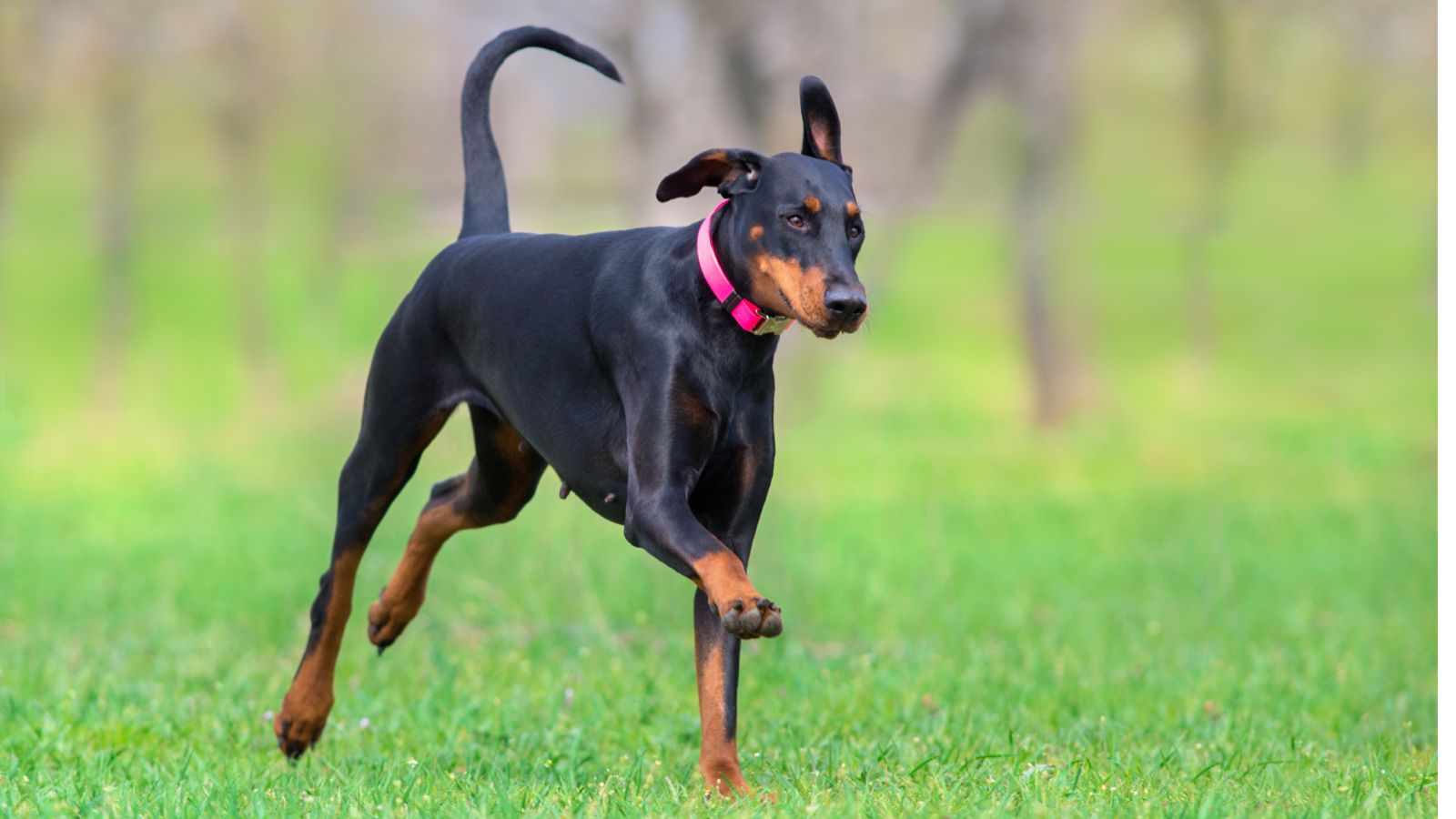
Dilated cardiomyopathy (DCM), also known as DCM, is one of the most studied heart diseases in dogs—and one of the most concerning for Doberman owners, in which it is quite common. This condition affects the heart muscle, which becomes thinner and weaker over time, making it difficult to pump blood. As the disease progresses, the animal may exhibit fatigue, exercise intolerance, fainting, and, in more severe cases, sudden death. Most alarmingly, DCM often progresses silently: seemingly healthy dogs may be in the early stages of the disease without showing any visible signs.
What science has discovered
Researchers followed hundreds of Dobermans for several years, analyzing dogs with a confirmed diagnosis of DCM based on clinical history, regular cardiac exams, and monitoring over time. This data allowed them to identify four genetic variants associated with the risk of the disease, named DCM1, DCM2, DCM3, and DCM4.
For a long time, only the first two variants — DCM1 and DCM2 — were known and widely tested. However, recent studies have revealed two others (DCM3 and DCM4), which have been shown to be strongly associated with the disease, especially in Dobermans of European origin. This means that dogs with no apparent risk according to older tests may, in fact, carry important variants that were previously undetected.
These four genetic regions act in an additive way — that is, the combination of variants in more than one of these regions significantly increases the likelihood of developing the disease.
An invisible risk that can be revealed.
DCM is a complex and multifactorial disease: it involves genetic, environmental, and even nutritional factors. However, genetics plays a central role, as certain mutations significantly increase the risk of heart weakening throughout life. Dogs with two or more risk variants tend to develop the disease earlier or more severely, but the reverse is also true—there are Dobermans without known variants that can become ill, which shows that there are still factors to be discovered.
Therefore, genetic testing is not just for "confirming" the disease, since the diagnosis is already made through cardiac exams. The main application of the test is, in fact, to anticipate risks, guiding veterinary monitoring. Knowing that a dog carries risk variants allows it to be monitored more closely, with periodic cardiac evaluations, electrical function tests, and specific care at each stage of life.
What does this mean for breeders and guardians?
For breeders, genetic information is an essential reproductive management tool. Testing all breeding animals allows for responsible crossbreeding planning, avoiding combinations that concentrate multiple risky variants. Since these mutations are relatively common in the breed, the goal should not be to exclude all carriers—which would dangerously reduce genetic diversity—but to manage risks with balance and knowledge.
For pet owners, understanding a dog's genetic profile is a form of prevention. A Doberman can live a healthy and fulfilling life even with genetic variations, provided it receives proper care. This includes regular cardiac check-ups, attention to signs of fatigue, and, when indicated, complementary tests to detect early changes. When the first changes are detected, the veterinarian can prescribe medication and even dietary changes that will protect the heart from rapid deterioration, giving the pet more years of quality life. Genetics is not a sentence: it's a map that shows where we should pay closer attention.
The contribution of petgenoma
Based on the latest research, petgenoma offers a genetic test that simultaneously assesses the four variants associated with CMD — DCM1, DCM2, DCM3, and DCM4. This analysis provides a comprehensive view of the risk, allowing veterinarians, breeders, and pet owners to have the best tool available for preventative decisions.
Dilated cardiomyopathy is one of the most challenging diseases in veterinary cardiology, but also one that has advanced the most in terms of genetic understanding. Today we know that the key to reducing its incidence lies not only in detecting the disease, but in understanding who is most likely to develop it and why.
Knowing your Doberman's DNA is the first step in ensuring not only more years of life, but also better quality of life in those years — because, when it comes to health, information is always the best preventative treatment.
And what about dogs of other breeds, or even mixed breeds?
Although more commonly seen in breeds like the Doberman, Boxer, and Cocker Spaniel, dilated cardiomyopathy (DCM) can affect dogs of various breeds and even mixed breeds. Cases of the disease are frequently observed in dogs without a classic predisposition—showing that the problem is much more common than imagined.
This occurs because CMD is a multifactorial condition, in which genetic, nutritional, and environmental factors combine. The genetic markers analyzed by petgenoma may be present in mixed-breed dogs or even in other breeds that have not yet been studied and for which the predisposition to the disease is unknown. However, this does not mean that these markers are not important or significant in these animals: it is of great importance to combine genetic knowledge with clinical history! When any of these markers are present, petgenoma recommends attention from the veterinarian and owners, since the risk of the disease appearing in these animals may exist regardless of whether they have been described in the literature.
Therefore, it is important that any dog showing signs of easy fatigue, coughing, or fainting be evaluated by a veterinarian. And, in suspected cases, petgenoma genetic testing can help identify inherited risks—allowing for early monitoring and a personalized prevention plan.
Enrico Ferraz
Veterinary Medicine student - USP (8th semester)
petgenoma analyst
Fabiana Michelsen de Andrade
Geneticist specializing in small animals.
Biologist, Master's and PhD from UFRGS.
Postdoctoral studies in Cellular and Molecular Biology (United Kingdom) and in Animal Genetic Improvement (UFRGS)
Founding partner and scientific director of petgenoma



