Herniated disc in dogs: warning signs and the role of genetics in prevention.
02/04/2026
Seeing your best friend struggle to walk or show pain when picked up is one of the most distressing situations for a pet owner. Unfortunately, a herniated disc in dogs is a relatively common orthopedic and neurological condition that can drastically affect the animal's quality of life if not diagnosed and treated early.
At petgenoma, we believe that knowledge is the most powerful tool for longevity. Understanding why some pets develop spinal problems and others don't goes beyond observing physical symptoms, requiring a deeper analysis of the animal's biology. In this context, genetics plays a crucial role in predisposing pets to this condition, technically known as Intervertebral Disc Disease (IVDD).
Throughout this guide, you will understand the main warning signs, treatment options, and how you can use animal DNA mapping to provide a safer and more comfortable life for your companion.
What causes a herniated disc in dogs?
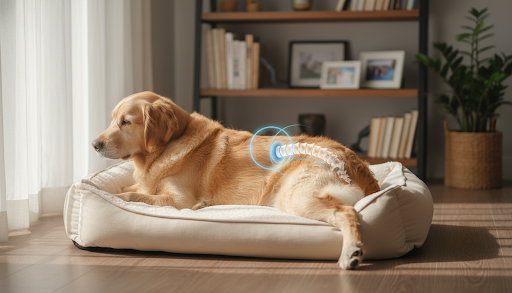
A dog's spine is composed of vertebrae, and between them are intervertebral discs that act as shock absorbers. A herniated disc in dogs occurs when the inner material of these discs shifts or ruptures, pressing on the spinal cord or nerve roots. As a result, this compression can cause intense pain and, in more severe cases, lead to paralysis.
Generally speaking, there are two main types of intervertebral disc disease:
Type I : acute extrusion, common in young dogs of chondrodystrophic breeds.
Type II : gradual protrusion, more frequent in older dogs of large breeds.
Regardless of the type, early detection of symptoms is the main factor that determines the success of recovery.
Symptoms of a herniated disc: how to identify the problem?
Clinical signs can range from mild discomfort to a neurological emergency. Furthermore, since pets tend to instinctively hide pain, owners need to be attentive to subtle changes in behavior.
Difficulty walking : The dog starts walking with a "waddling" gait or dragging its hind legs.
Hunched posture : The animal keeps its back arched (kyphosis) to try to relieve pressure.
Sensitivity to touch : The pet cries or complains when you try to pick it up or pet its back.
Motor incoordination : Loss of balance and weakness in the limbs.
Reluctance to jump or climb stairs : Activities that were once simple become painful or impossible.
If you notice any of these symptoms, it is crucial to seek veterinary care urgently. Often, these signs are mistaken for fatigue or old age, but the condition can progress rapidly.
Breeds prone to IVDD: the influence of genetics
If you notice any of these symptoms, it is crucial to seek veterinary care urgently. Often, these signs are mistaken for fatigue or old age, but the condition can progress rapidly.
The breeds most commonly known to be prone to IVDD are:
Dachshund (the famous "sausage dog");
French and English Bulldogs;
Beagle;
Poodle;
Shih Tzu.
These predispositions can also occur in mixed breeds, and therefore, knowing your pet's genetic makeup is essential to anticipate risks. Especially in the case of rescued dogs, understanding their ancestry can be the first step towards an effective preventative plan.
Diagnosis and treatment for canine spine problems.
Diagnosis begins with a detailed neurological examination. For confirmation, imaging tests such as CT scans and MRI are essential.
Treatment varies depending on the severity of the condition .
Conservative treatment : rest, anti-inflammatory drugs and analgesics;
Surgery : indicated in cases of paralysis or loss of sensation;
Rehabilitation : physiotherapy and acupuncture help in recovery.
Currently, veterinary rehabilitation is considered one of the pillars of modern medicine, contributing significantly to the animal's quality of life.
The role of genetics in herniated discs.
Although there is a racial predisposition, not all dogs of the breeds mentioned are at high risk. In fact, it is possible to assess the presence of risk through genetic testing for the FGF4 gene marker. In the case of the presence of two copies of this marker, the indication is a joint evaluation of the spine through X-ray to determine the number of calcified discs - the higher this number, especially in dogs with genetic risk, the stronger the dog's predisposition actually is.
Read more about this in the text : Understand how a herniated disc in dogs affects genetics.
Prevention of spinal problems and daily care
Although genetics plays a direct role, the environment and routine also play a fundamental part in prevention.
Some simple measures include :
Weight control : prevents overloading the spine;
Use of ramps : reduces impact when going up and down;
Harness instead of collar : distributes pressure better;
Light exercises : strengthen the supporting muscles.
Furthermore, early genetic diagnosis allows for the identification of risks even before the first symptoms appear, enabling more effective preventive interventions.

Investing in health and well-being with petgenoma.
Genetics should not be seen as a death sentence, but as a preventative tool. By understanding your pet's risks, you can make more informed decisions about daily care.
Although a herniated disc in dogs is a serious condition, with proper care it is possible to ensure a long and healthy life.
In short, providing personalized care for your pet's health is one of the greatest demonstrations of love.
Protect your best friend's health with petgenoma.
Understanding your pet's genetics is the first step in preventing disease and promoting well-being. petgenoma offers advanced tests to map risks and personalize care.
This way, you ensure more time, quality of life, and safety for your partner.
We are located at Av. Prof. Lineu Prestes, 2242 - Room 25 - Cidade Universitária, São Paulo SP and ready to help you on this journey of discovery.
How about following our daily tips and scientific facts at @petgenomabr ? Together, we can transform science into more quality time between you and your pet.
Essay
Petgenoma



