Dog age: learn how to calculate and care for your pet.
04/03/2026

Have you ever heard that each year of a pet's life is equivalent to seven human years? This is one of the most popular beliefs among pet owners, but modern science shows that the reality is much more complex. Understanding your dog's true age is the first step in providing effective preventative healthcare and ensuring your best friend lives a high-quality life for much longer.
Knowing what stage of life your pet is in allows for adjustments to their diet, exercise routine, and, most importantly, medical care. After all, the needs of a puppy are completely different from the demands of a senior dog. In this guide, we will demystify old calculations and show how genetic and biological science defines the aging process in our companions.
The myth of the 7 years and the new science.
The rule of multiplying age by seven emerged as a simplistic estimate based on the average lifespan of humans and dogs in the 1950s. However, advances in veterinary medicine have revealed that pet aging does not occur linearly. In the first two years, dogs mature very quickly, reaching physical and sexual maturity that a human would take almost two decades to achieve.
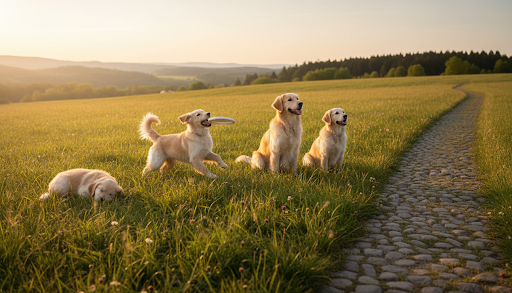
Currently, researchers use models based on DNA methylation to understand how the canine organism transforms. This chemical process indicates that a dog's age progresses rapidly in youth and slows down as the animal gets older. Therefore, that old calculation can lead to misperceptions about the animal's true health condition.
How to accurately calculate a dog's age?
To arrive at a number closer to reality, it's essential to consider the dog's size . Small breed dogs, such as Poodles or Shih Tzus, tend to live longer and age more slowly after adulthood. Giant breeds, such as Great Danes, have a faster metabolism and a naturally shorter canine life expectancy .
If you want to know how to calculate a dog's age , follow these general guidelines accepted by experts:
First year: Equivalent to approximately 15 human years for all sizes.
Second year: Add approximately 9 years, totaling 24 human years at the end of the period.
Subsequent years: For small dogs, each year is worth about 4; for medium dogs, it's worth 5; and for large or giant dogs, it can be worth 7 to 9 years.
This variation explains why a 10-year-old Terrier is still very active, while a Labrador of the same age already shows clear signs of senility. Understanding this dynamic helps to identify problems such as canine obesity early, which can severely impact longevity.
Of course, this is an average for each size/breed, but it's also necessary to take into account inter-individual variation, both due to the pet's genetics and the health care it receives throughout its life.
The four stages of a dog's life.
The canine biological cycle is divided into significant stages. Each one requires close attention from the owner to ensure the animal's well-being and longevity:
Puppy stage : This stage lasts from birth until the end of skeletal growth (between 6 and 18 months, depending on size). It's the vaccination and learning phase.
Young Adult: The dog has reached its final size, but still has a lot of energy. It's the ideal time to establish healthy habits.
Mature Adult: Metabolism begins to change subtly. At this stage, preventative healthcare becomes essential to avoid chronic diseases.
Senior: The last quarter of a dog's life expectancy. Care for joints, vision, and internal organs should be intensified.
To learn more about how each stage requires specific care, check out these resources:
Physical signs of aging in pets
We don't always know the exact date of birth, especially in the case of adopted animals. In these scenarios, observing physical signs is the best way. Teeth are the main indicators: puppies have very white and pointed teeth, while adults show some tartar buildup and wear.

In addition to changes in the dental arch, the appearance of white hairs around the muzzle and eyes usually indicates that the pet has entered its senior phase. Cloudiness in the eyes (nuclear sclerosis) and reduced muscle mass are also common characteristics of aging pets . According to the American Veterinary Medical Association (AVMA) , regular checkups are crucial starting at seven years of age, on average for all dogs.
The influence of genetics on animal longevity.
Although size and lifestyle are determining factors, genetics plays a silent and powerful role in a dog's lifespan . Some breeds are predisposed to diseases that can shorten their lives, while others carry genes for resistance. Knowing the ancestry and hereditary risks allows the owner to anticipate necessary care.
For example, knowing if your pet has a genetic predisposition to heart or joint problems allows you to adapt their diet and level of physical exertion long before symptoms appear. Genomic science is now the greatest ally of animal longevity , transforming reactive treatment into proactive care. By understanding the dog's life stages through DNA, you provide exactly what their body needs to age with dignity.
Planning the future with petgenoma
Understanding a dog's age is just the beginning of a journey of deep and personalized care. At petgenoma , we believe that science is the shortest path to showing love for your pet, offering tests that reveal everything from breed composition to hidden health risks. Our headquarters are located at Avenida Professor Lineu Prestes, 2242, São Paulo SP , and we serve pet owners throughout Brazil who seek excellence in preventive medicine. Follow our news and genetic health tips by following the profile @petgenomabr and discover how technology can transform your best friend's years into unforgettable moments.
Essay
Petgenoma



