Mast cell tumors in dogs: prevent and treat responsibly.
14/08/2025

Index
Introduction
Mast cell tumors in dogs are one of the most common skin neoplasms affecting our four-legged friends. This type of tumor can manifest in various ways, ranging from small lesions to aggressive and invasive masses.
Therefore, understanding this condition is fundamental to ensuring the well-being and health of animals, since early diagnosis and appropriate treatment increase the chances of success.
Therefore, it's possible to act quickly at the first signs and seek the best therapeutic options. In this article, you will learn everything about mast cell tumors in dogs, their causes, symptoms, diagnosis, treatment, and prevention methods. Check it out!
What is a mast cell tumor in dogs?

A mast cell tumor is a tumor that develops from mast cells, cells responsible for the body's defense and found mainly in the skin, but also in other tissues.
Mast cells contain granules rich in histamine and other chemical substances. When there is uncontrolled proliferation of these cells, a mast cell tumor arises, which can behave in a benign or malignant manner. Therefore, the severity of the condition depends on the tumor's grade, its location, and its growth rate.
Furthermore, the disease presents a wide variety of clinical forms: it can be a single lesion, multiple masses, or even infiltrate internal organs. Therefore, it is essential to observe any skin changes and seek veterinary evaluation.
Causes and risk factors
Mast cell tumors can have multiple origins. Among the main causes are:
Genetic factors.
Racial predisposition.
Environmental influences.
Furthermore, alterations in the immune system , chronic infections, and persistent inflammatory processes are also considered risk factors for the development of this condition.
Certain breeds , such as Shar Pei, Golden Retriever, Labrador Retriever, Boxer, Bulldog, and Boston Terrier, are more prone to developing mast cell tumors. Although more frequent in these breeds, the disease can affect any animal, regardless of age, sex, or lineage.
Symptoms of canine mast cell tumor

Mast cell tumors in dogs can manifest in different ways, depending on the degree of aggressiveness of the tumor.
The most common signs include nodules or masses on the skin, which may be reddish, ulcerated, or itchy. There may also be edema, local pain, and, in advanced cases, systemic symptoms such as vomiting, diarrhea, and lethargy.
It's important to point out that mast cell tumors can change size rapidly or even disappear temporarily, confusing the pet owner. Therefore, any persistent skin change should be investigated, right?
Diagnosis of mast cell tumor
It is worth noting that the diagnosis of canine mast cell tumors is made through clinical examination, aspiration cytology, and biopsy.
The veterinarian collects samples from the lesion for microscopic analysis, identifying the presence of abnormal mast cells. In some cases, complementary exams such as ultrasound, radiography, and tomography are necessary to assess the extent of the tumor and possible metastases.
Treatment of mast cell tumors

Treatment for mast cell tumors depends on the grade, size, and location of the tumor. Surgery is the primary approach, aiming for complete removal of the mass. In high-grade cases or those with metastasis, chemotherapy, radiation therapy, or targeted therapies may be necessary.
In addition, symptom control is essential, since mast cell tumors in dogs can release histamine, causing allergic reactions and gastric complications. Therefore, medications such as antihistamines and gastric protectors are frequently prescribed to improve the animal's quality of life during treatment.
Prevention and ongoing care
Prevention of mast cell tumors in dogs relies on regular veterinary checkups, especially in breeds predisposed to the disease.
Therefore, frequent skin inspection and attention to any changes are simple but effective measures that dog owners should practice. At the same time, it's necessary to avoid exposing the pet to carcinogenic agents by maintaining a healthy routine.
After treatment, regular professional follow-up is essential, as mast cell tumors can recur. In these cases, routine examinations and constant monitoring ensure the early detection of new lesions, increasing the chances of successful treatment.
Genetic testing: a tool for prevention and diagnosis.
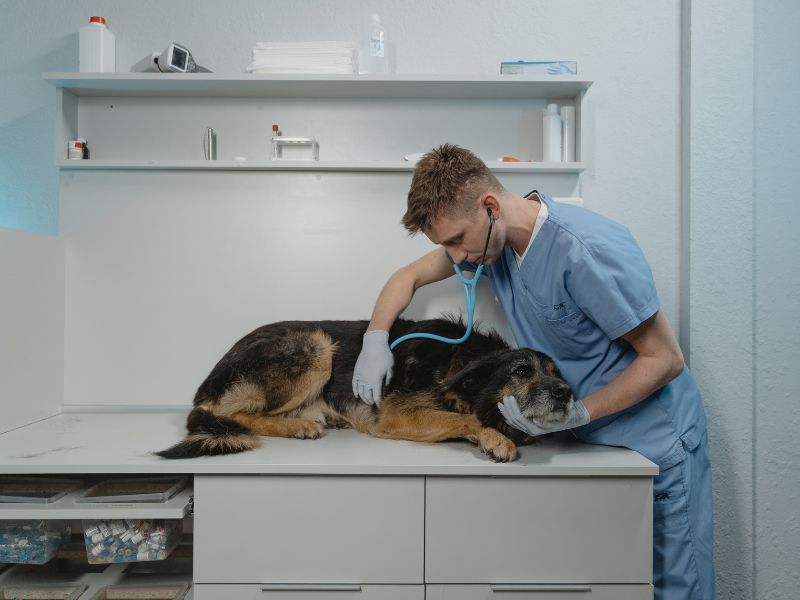
Advances in veterinary medicine have brought new possibilities for the early diagnosis of mast cell tumors in dogs, and genetic testing is one of them. This test, performed using saliva samples, identifies specific mutations associated with the development of diseases, mainly in breeds with a greater genetic predisposition .
In addition to aiding in the early identification of higher-risk animals, genetic testing allows for more personalized and targeted monitoring. This way, pet owners and veterinarians can adopt preventative strategies, rigorous monitoring, and, if necessary, early interventions, reducing complications and increasing treatment success rates.
When is genetic testing recommended?
Genetic testing to identify mast cell tumor risk in dogs is especially recommended for animals of breeds predisposed to or with a family history of the disease.
However, it can be a useful tool for any animal, since, despite a higher incidence in certain groups, mast cell tumors in dogs can affect any dog. Furthermore, through this investigation, it is possible to assess the potential risk of developing other conditions.
The main advantage of genetic testing is the possibility of early intervention. With the results in hand, the veterinarian can propose a more rigorous monitoring plan, perform routine examinations more frequently and, if necessary, initiate preventive treatments.
Meet petgenoma: your partner in genetic testing for pets.
If you are looking for a reliable and innovative solution to discover your dog's breed and identify mast cell tumor risks, petgenoma is the ideal company for you.

Specializing in pet genetics, petgenoma offers highly accurate tests, focusing on preventative medicine, breed identification, and disease predisposition. With our own laboratory and national database, we guarantee results with 98% accuracy using Illumina technology.
The process is simple: the pet owner collects the sample at home using a buccal swab, sends it to the lab, and receives the results within 15 business days, with full support throughout all stages.
The company offers different kits, geared towards dogs and cats. With the Breed Identification Kit , you have access to the pet's origin, confirmation of parentage, consanguinity, and physical characteristics.
Want more? Then you might be interested in the Premium Kit , which offers breed assessment, but also analyzes more than 300 diseases. There's also the Premium Clinical Kit , which provides all of that, plus analyzes the pet's oncological and obesity risks.
Therefore, if you want to deeply understand your pet and ensure a healthier life for them, count on petgenoma. Want to discover how genetics can transform your relationship with your furry friend? Then check out our products !
Conclusion: Mast cell tumor in dogs
As we have seen, mast cell tumors in dogs are a serious condition that requires attention, knowledge, and responsibility from owners. Early diagnosis and appropriate treatment can provide a long and healthy life for the animal, minimizing complications of the disease and improving the prognosis.
With modern tools, such as canine genetic testing, you will be better prepared to identify warning signs, seek professional guidance, and provide the best care for your pet. After all, information is the main ally in the fight against canine diseases and in favor of animal welfare.
Essay
Petgenoma



