Personalized Medicine: Did you know that some medications can be very dangerous to your dog's health?
30/04/2024
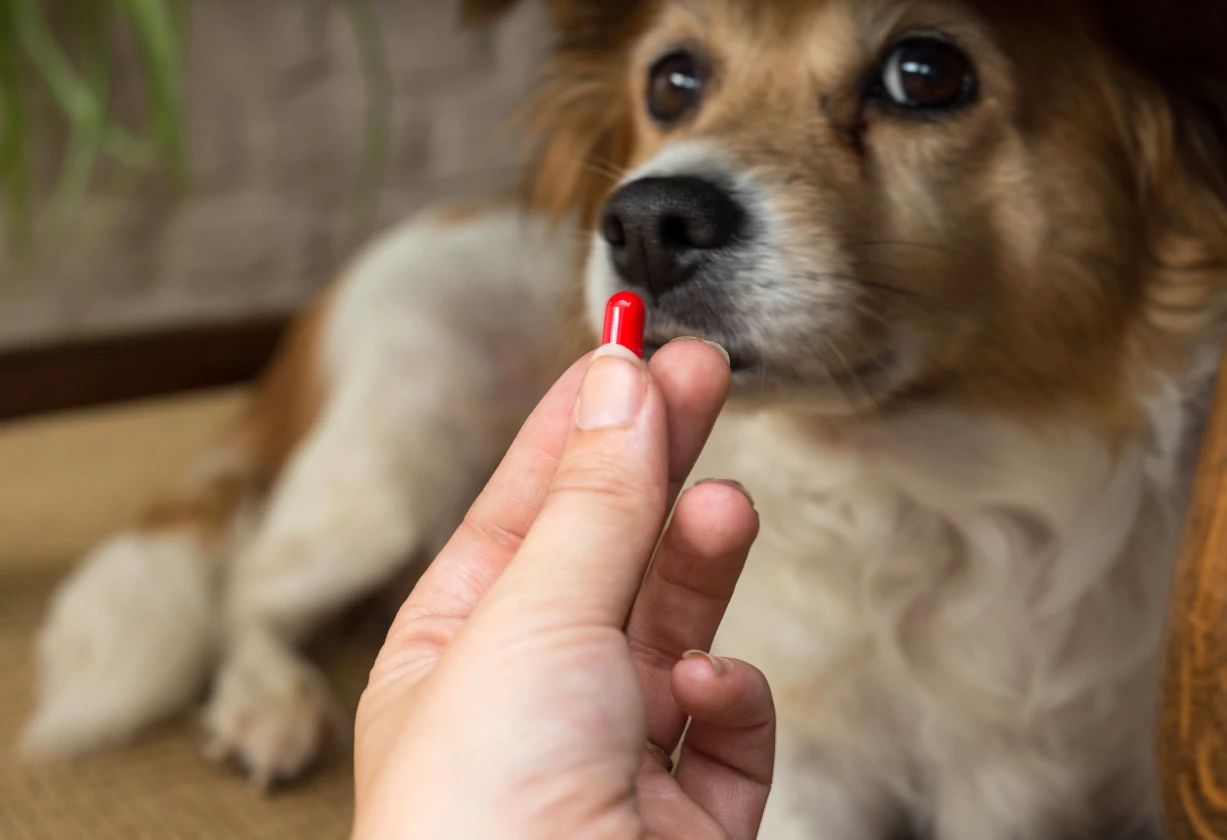
Dogs of the Collie, Shetland Sheepdog, Australian Shepherd, and Border Collie breeds, or even a mix or a mixed-breed dog originating from these breeds, have a high chance of having "multiple drug intolerance." This problem, also known as intolerance or hypersensitivity to ivermectin , can be fatal if you or your dog's veterinarian are unaware of this particularity in your pet and use several medications to treat different diseases. The good news is that there are genetic tests that can show whether or not the dog has the problem, which greatly increases safety in pharmacological management.
The affected animal is called intolerant or hypersensitive because, when using certain types of medication, these accumulate abnormally in the brain, causing a series of clinical signs. These signs include depression, drowsiness, excessive salivation, tremors, ataxia (loss of coordination of movements), pupil dilation, and can even lead to coma and death. Contrary to the general knowledge of general veterinarians, it is important to remember that ivermectin is not the only related medication, despite giving the problem its name. In other words, the solution to increase safety cannot simply be to avoid using ivermectin, as other drugs can lead to this type of clinical picture in hypersensitive animals. Examples include doramectin (an antiparasitic agent), vincristine , vinblastine , and doxorubicin , which are chemotherapeutic agents, as well as any drug whose substrate is P-glycoprotein. The complete list of drugs that cause this type of reaction can be found on the Washington State University website (http://vcpl.vetmed.wsu.edu/problem-drugs).
Many veterinarians, aware of this risk, choose not to use these medications in dogs of the most affected breeds, and among these, the Collie is the breed best known for being affected. However, these would often be the first-choice medications, and it is extremely important to identify the animal that may experience undesirable effects, and only for these animals should the use of these active ingredients be avoided.
The only way to differentiate these animals before using medication is through genetic testing, as this problem is caused by a known mutation in the gene called MDR1 . Originally described as recessive, this mutation is now known to be incompletely dominant : dogs carrying only one copy of the mutation are susceptible, but manifest clinical signs in a much milder way than dogs with two copies of the mutation (inherited from both parents), in whom the clinical manifestations are more severe. Recently, it has even been discovered that dogs carrying only one copy can be treated with the medications in question, but at a lower dose, which becomes safe. Therefore, it is extremely important clinically for affected breeds to have their genetic status determined by DNA testing, as this information can be of great value to the veterinarian: in addition to indicating whether the dog cannot under any circumstances be treated with these drugs, the test result may show that it can be treated, but at a lower dose, or even be treated with the standard dose, even if it is a breed with a high prevalence of the problem.
The MDR1 genetic test determines if the animal has no copies of the mutation or variant in the gene, if it is a carrier of one copy of the variant, or if it has the variant in duplicate (affected) . It is very important that your dog's veterinarian knows the result of its genetic test, to direct different types of treatment more effectively and safely. All variants described by science to date are tested by the PREMIUM product from petgenoma , which you can find here.
Fabiana Michelsen de Andrade
Geneticist specializing in small animals.
Biologist, Master's and PhD from UFRGS.
Postdoctoral studies in Cellular and Molecular Biology (United Kingdom) and in Animal Genetic Improvement (UFRGS)
Founding partner and scientific director of petgenoma



