Cat breeds: A complete guide to genetics and care.
04/03/2026

Have you ever stopped to observe the incredible diversity that exists among felines? From the imposing Maine Coon to the elegant Siamese, cat breeds present unique characteristics that go far beyond physical appearance. Understanding these particularities is the first step in providing a healthy and balanced life for your companion.
Many pet owners believe that a cat's behavior and health are solely determined by its environment. However, science shows that a cat's genetics play a fundamental role in its personality, predisposition to disease, and even nutritional needs.
In this guide, we will explore the world of cat breeds , helping you understand how feline lineages were formed and why knowing your pet's breed composition is a powerful preventative medicine tool.
The fascinating diversity of cat breeds around the world.
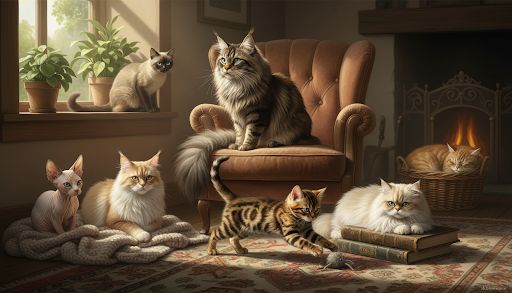
Currently, there are dozens of cat breeds recognized by international federations. Each one carries a specific genetic heritage, shaped by centuries of natural selection or targeted crossbreeding by breeders. These feline varieties exhibit distinct coats, sizes, and temperaments that enchant owners worldwide.
Cats like the Persian are known for their long fur and calm temperament, while the Bengal displays a wild appearance and inexhaustible energy. This differentiation occurs due to the groups of domestic cats that developed in different geographical regions, adapting to varied climates and functions throughout history.
How genetics defines the main types of cats.
A cat's appearance is just the tip of the iceberg. When we talk about cat breeds , we're dealing with a complex set of genes that determine everything from eye color to predisposition to hereditary health conditions. Feline ancestry reveals secrets that are often not visible to the naked eye.
For example, certain breeds have a higher risk of developing heart or kidney problems. By identifying the breed profiles present in your cat's DNA, you can act proactively. Personalized medicine uses this data to create more accurate examination protocols, ensuring that your pet receives special attention where it needs it most.
Mixed-breed cats vs. purebred cats: What's the real difference?
In Brazil, the vast majority of domestic cats are mixed-breed (SRD). However, this does not mean that they do not possess a rich mix of cat breeds in their genetic code. Often, a "viralata" cat carries traits of purebred cats that have been visually lost over generations.
The real difference lies in predictability. While in a purebred animal we expect standardized behaviors and physical traits, in mixed-breed cats, surprise is constant. Therefore, many owners seek to understand how to determine a cat's breed through DNA testing, revealing the true racial composition behind that unique coat pattern. In Brazil, the vast majority of domestic cats are mixed-breed animals. However, this does not mean they lack a rich mix of cat breeds in their genetic code. Often, a "mixed-breed" cat carries traits of purebred cats that have been visually lost over generations.
The real difference lies in predictability. While in a purebred animal we expect standardized behaviors and physical traits, in mixed-breed cats, surprise is constant. Therefore, many owners seek to understand how to determine a cat's breed through DNA testing, revealing the true racial composition behind that unique coat pattern.
Specific care according to the lineage.
Each cat breed requires specific care to maintain its well-being. Cats with a genetic predisposition to dermatological problems, for example, need extra attention to hygiene. Furthermore, infectious and parasitic diseases can affect felines in different ways depending on their immune resistance.
It is crucial to be aware of common conditions, such as mange in cats or sporotrichosis in cats , which can manifest more severely in animals with sensitive immune systems. Knowing the characteristics of cats in your pet's lineage helps the veterinarian establish a more robust and effective prevention plan.
Daily brushing for long-haired breeds.
Environmental enrichment for high-energy breeds.
Frequent check-ups to monitor genetic predispositions.
A balanced diet to prevent feline obesity.
The importance of racial identification for health.
Many pet owners wonder if investing in breed identification is just out of curiosity. The answer is a resounding no. Knowing which cat breeds make up your friend's DNA is a health strategy. According to international feline organizations , genetic mapping allows for the identification of variants associated with serious diseases even before symptoms appear.
By discovering the feline varieties present in the animal's family tree, the owner gains clarity about its behavior. If your cat is descended from more active breeds, it will need more vertical stimulation and hunting games. If the genetics point to more domesticated lineages, the focus should be on weight control and comfort.
Myths and truths about cat breeds
There are many misconceptions when it comes to cat breeds . One of the most common myths is that mixed-breed cats are "immune" to genetic diseases. In fact, they can inherit the same predispositions as their purebred ancestors, but the genetic mix often masks the early signs.
Another important point is the belief that all purebred cats are delicate. While some feline lineages require specific care, many breeds are extremely robust. The secret lies in knowledge: the more you know about your pet's origin, the better you can care for it.
Check out some articles that can help you better understand the pet world:
How to Find Out Your Cat's Breed : The Truth That DNA Reveals.
Sporotrichosis in cats : symptoms, risks, and how to protect your pet.
Science and love: The future with the petgenoma
Understanding cat breeds is a journey of discovery that strengthens the bond between owner and pet. Genetics isn't just about labeling; it's about providing a long and vibrant life for those you love. By using science to your advantage, you transform curiosity into genuine preventative care.
petgenoma is a pioneer in bringing advanced biotechnology directly to your home, facilitating access to crucial information about your feline's DNA. With our tests, you can discover ancestry and health risks simply and safely. We are located at Avenida Professor Lineu Prestes, 2242, São Paulo SP and serve all of Brazil. Follow us on @petgenomabr to keep up with the latest news in the world of pet genetics and ensure the best for your best friend.
Essay
Petgenoma



