If my dog is a purebred, why do so many other breeds appear in the results?
18/07/2025
Every dog evaluated by petgenoma receives its breed composition result after comparison with other dogs whose information is already in our database. In other words, there isn't a set of genes we can look for in your dog to certify that it is 100% of that breed! What we do is compare it with dogs that we are certain are of that breed , as illustrated in the figure below:
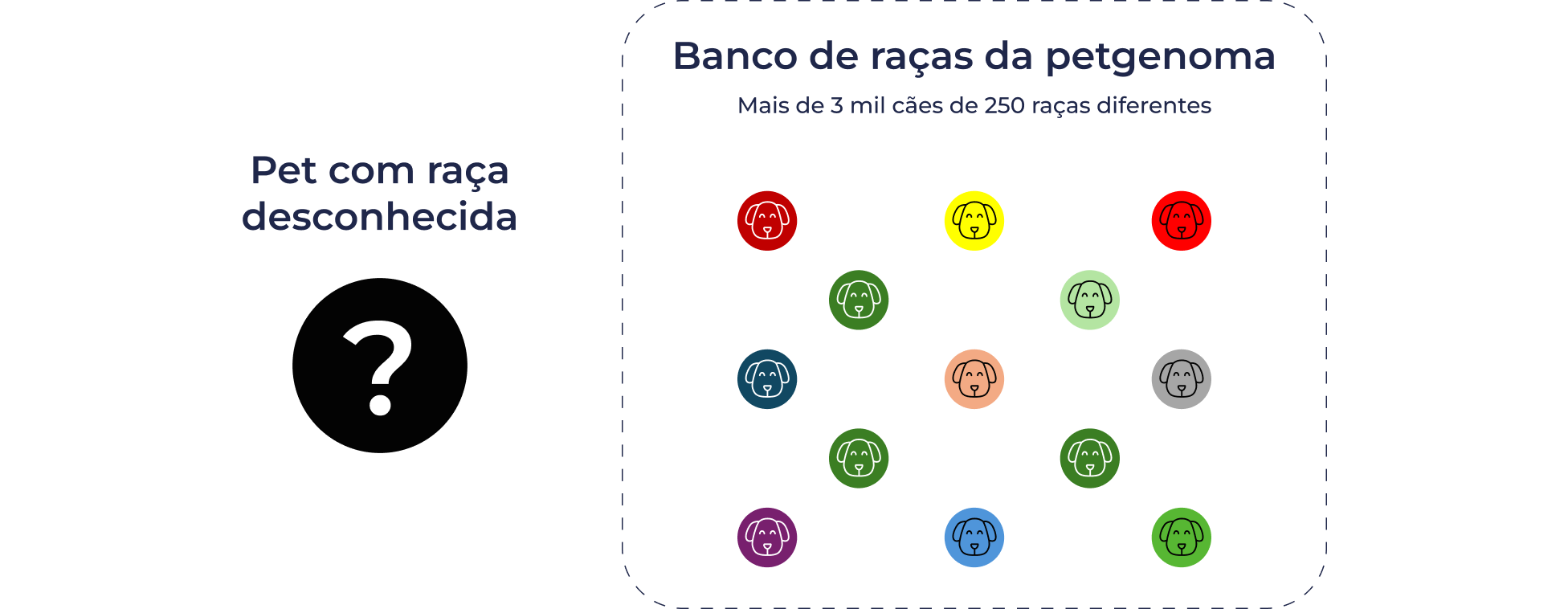 Figure 1
 When a dog's DNA test results show 100% matching a specific breed, this is because the petgenoma database already contains several lineages of that breed, and therefore your dog's DNA is recognized as matching one or more dogs of that breed, as in the 3 examples below:
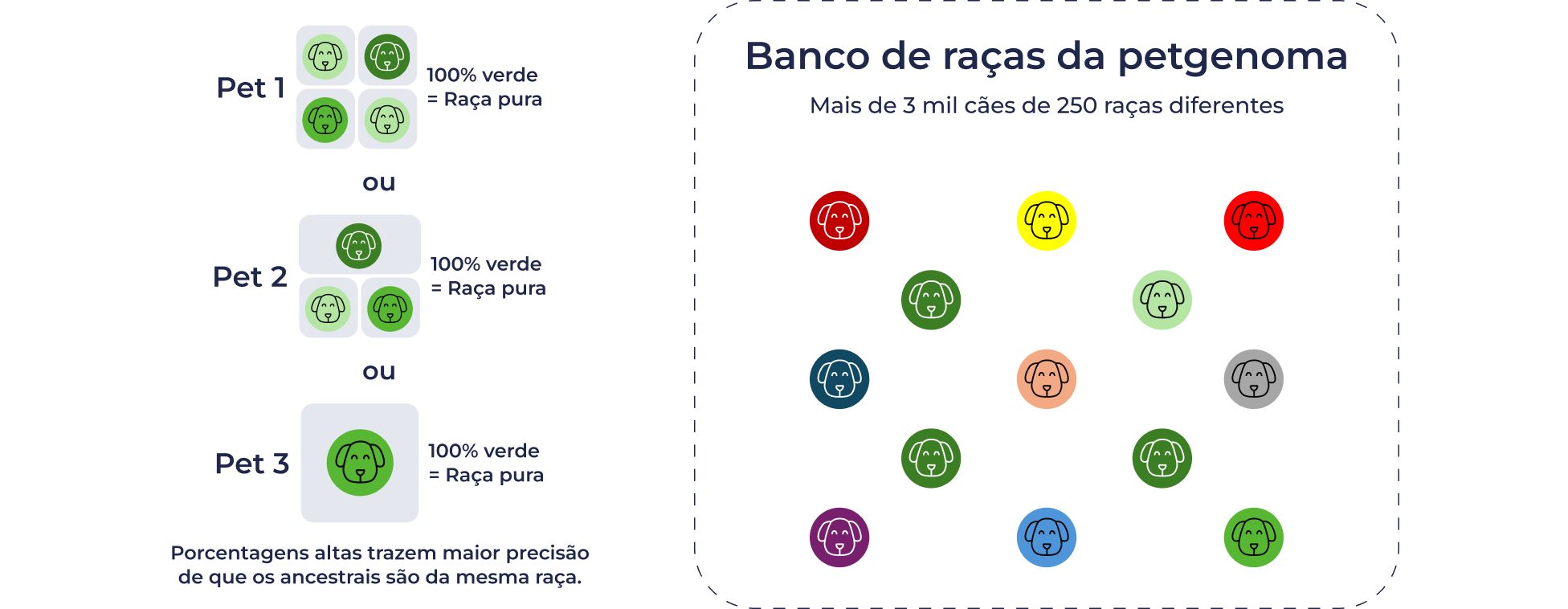 Figure 2
Another example is when we detect a mix of breeds, because part of the genetics of the dog being evaluated matches one breed in the database, and the other part matches another breed in the database, as shown below: 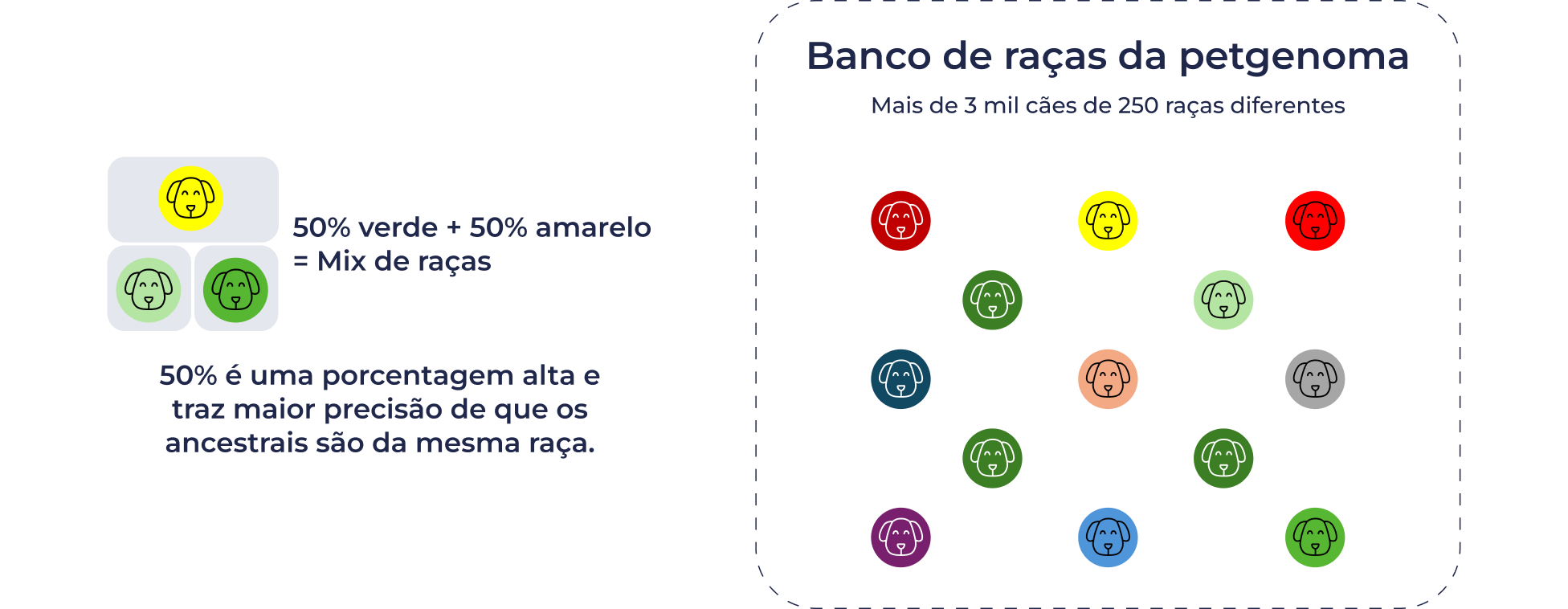 Figure 3
However, when a breed has relative heterogeneity, having several different lineages, it is possible that petgenoma will not find total similarity between the DNA of the analyzed dog and dogs in our database. For example, a purebred dog may have only 75% of its DNA identical to dogs in our database. In this case, our statistical analysis would generate a dog with 25% unknown genetics. As in the example below: 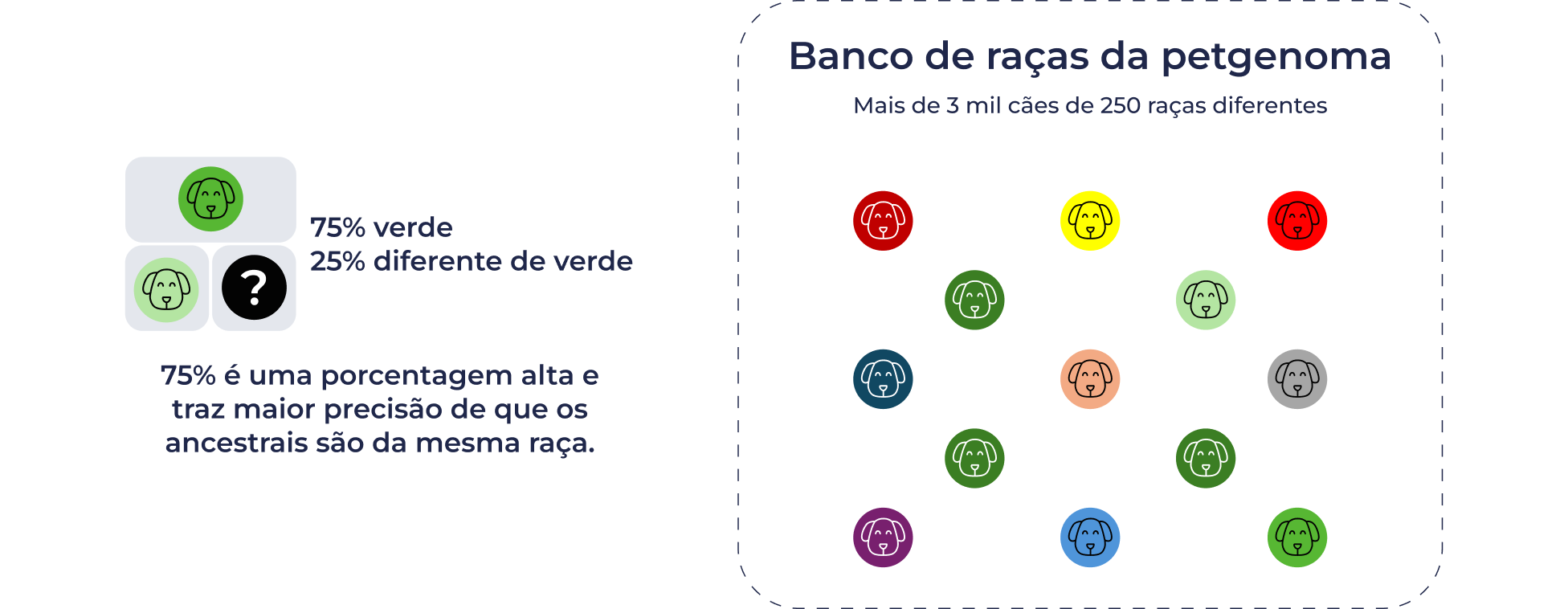 Figure 4
When we find genetic variability different from that of the dogs in our database, we move on to the in-depth analysis stage. In this stage, we look for sets of variants in your pet that are similar to those of dogs in our database. Let's say that in this first in-depth analysis, the following result appears: 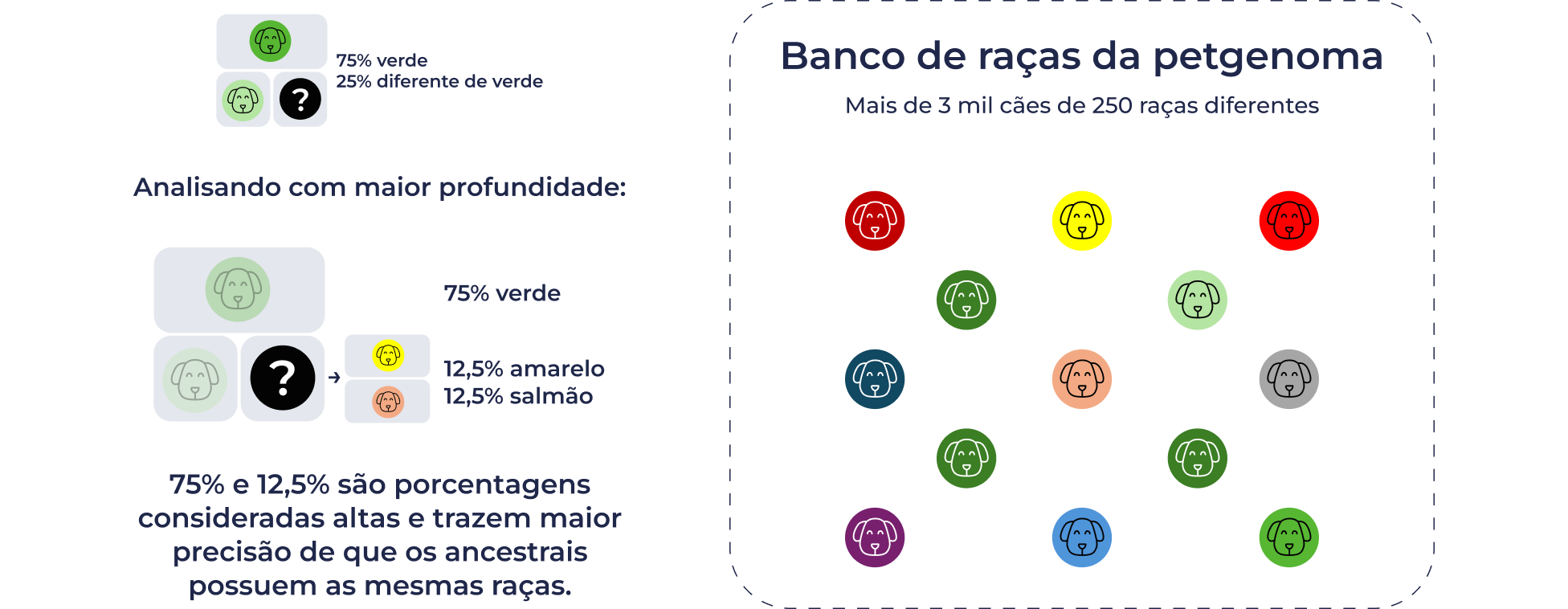 Figure 5
For breeds found above 10% , it means we have found breed mixtures that occurred from grandparents back in the family tree. Whenever we find more than 10% of a particular breed, we know that this is statistically significant and indicative of recent ancestry. When we do the first in-depth analysis and still don't find similarity of more than 10% , we look for weaker similarities within these initially unknown 25%, and some part of the genetics of each breed in the database. In this second in-depth analysis, we can obtain a large mixture of breeds in this portion of the dog's DNA analyzed, with values generally well below 10% , as in the example below: 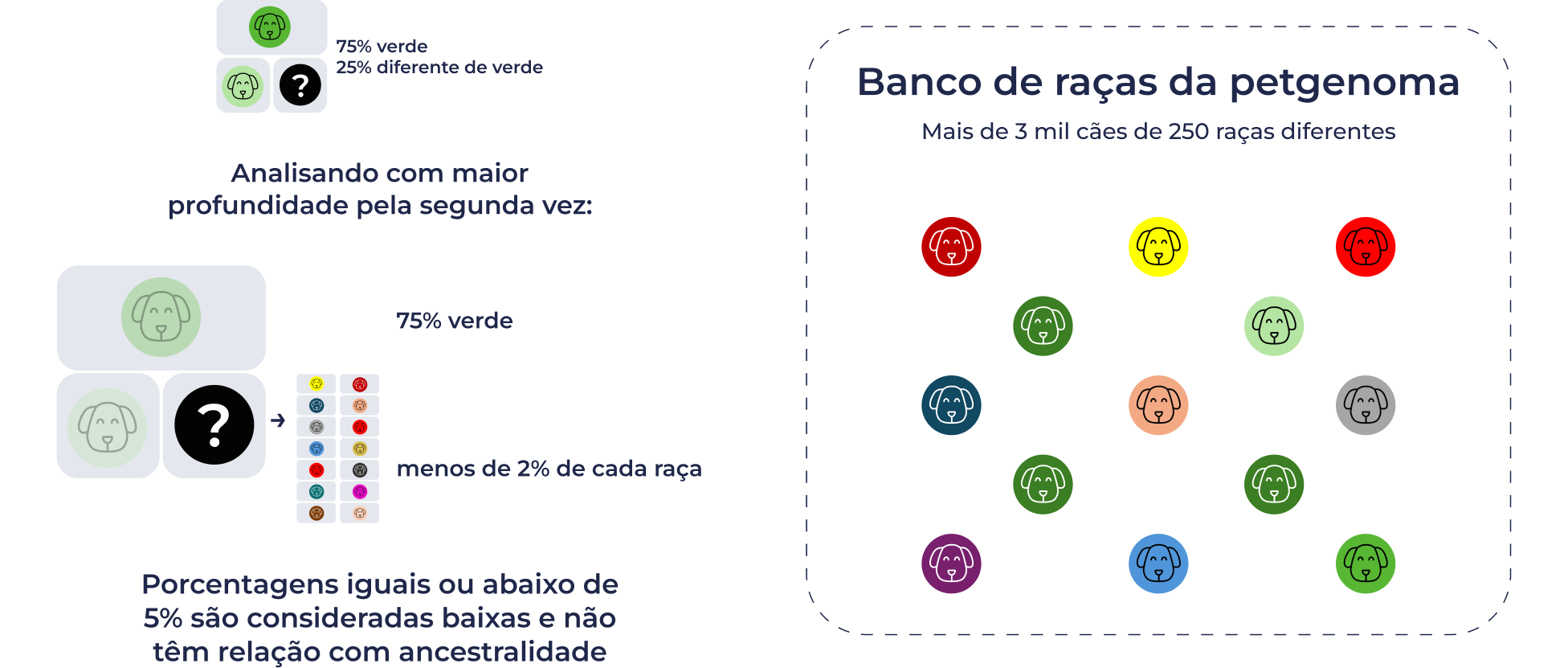 Figure 6
We only found the other breeds because we did this second, more in-depth analysis. It's important to understand that these very small values are statistically insignificant and have no relation to the dog's ancestry! So there are two possible interpretations for this final result:
1) Since the percentages are much lower than 25%, this dog's great-grandfather could very well be a mixed breed, meaning that for many generations there was no purebred dog in his lineage.
Or
2) These 25% are from some lineage of the original (green) breed itself that is not in our database! Since it is impossible to determine which of the two options above is correct, petgenoma generates a customized report for these cases, giving little emphasis to these 25%, as in the example below:
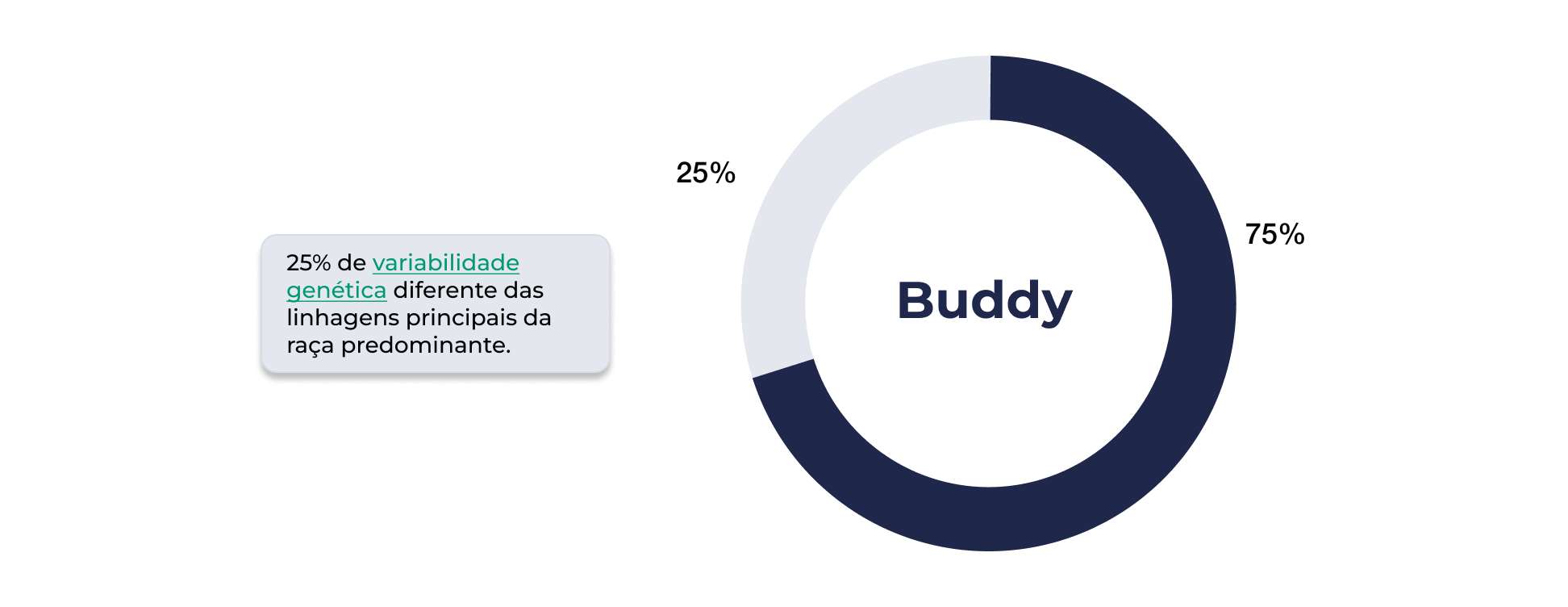 Figure 7
Now, remember that petgenoma is constantly expanding its database with purebred Brazilian dogs , which means that sooner or later a new lineage of the "green" breed will be added to the database, as in the example above. Note that if this lineage has a high similarity to those 25% not identified, the final result for the dog becomes that of a purebred!
Fabiana Michelsen de Andrade
Geneticist specializing in small animals.
Biologist, Master's and PhD from UFRGS.
Postdoctoral studies in Cellular and Molecular Biology (United Kingdom) and in Animal Genetic Improvement (UFRGS)
Founding partner and scientific director of petgenoma



