Border Collie: Understanding the Genetics, Behavior, and Health Risks of the Breed
27/03/2026
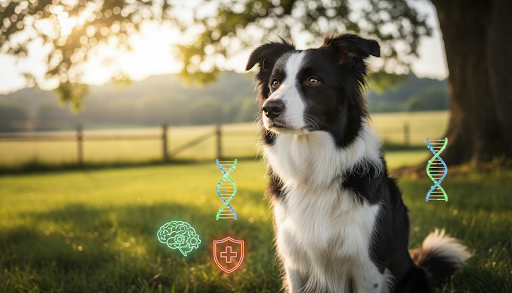
The Border Collie is often cited as the most intelligent dog breed in the world, ranking first in Stanley Coren's ranking. However, being a "genius" of the canine world involves a complexity that goes far beyond the ability to learn tricks quickly.
For pet owners who want to provide these animals with a fulfilling life, understanding the genetics and specific needs of the breed is the first step on a journey to well-being.
Furthermore, having a Border Collie at home means dealing with intense energy and an extremely active mind. This combination requires not only physical space, but also a constant commitment to preventative health and mental stimulation.
When we analyze animal DNA , we realize that many of the breed's defining characteristics—both positive and challenging—are directly linked to its genetic code.
In this guide, you will understand how science can help decipher your pet's behavior, prevent hereditary diseases, and improve their quality of life on a daily basis.
The origin and superior intelligence
The Border Collie originated in the border regions between Scotland and England. Over the centuries, these dogs were selectively bred for herding work, developing unique skills.
Unlike other breeds that use force or barking, the Border Collie controls the flock through its famous "eye." This behavior is a genetic trait that demonstrates its impressive ability to focus.
As a result of this selection, the breed developed an extremely attentive, responsive, and problem-solving-oriented profile. In other words, it's not just about intelligence, but a constant need for mental activity.
For this reason, when they do not receive adequate stimulation, these dogs tend to create their own "roles," such as trying to herd people, other animals, or even objects.
In this context, many pet owners wonder: how do I know my dog's breed? The answer lies in genetic analysis, which allows us to identify not only the breed composition, but also inherited behavioral patterns.
Behavior: far beyond physical energy
Although Border Collies need daily exercise, the true balance of the breed depends on mental stimulation.
An important point is that physical activity alone is not enough. Even after long walks, the dog may remain restless if there are no cognitive challenges.
Therefore, activities such as agility, frisbee, interactive games, and advanced obedience training are highly recommended.
Furthermore, these dogs possess a heightened emotional sensitivity. They can perceive subtle changes in their environment, such as variations in their owner's tone of voice and body language.
On the one hand, this makes training easier. On the other hand, it makes the breed more susceptible to anxiety, fear, and reactive behaviors if there is no proper socialization from an early age.
Health risks and the importance of genetics
Despite being a hardy breed, the Border Collie has some genetic predispositions that deserve attention.
Currently, veterinary medicine makes it possible to identify these risks even before symptoms appear, which reinforces the importance of prevention.
Among the main health problems, the following stand out:
Collie Eye Anomaly (CEA): affects retinal development and can lead to blindness;
Drug Sensitivity (MDR1 Gene): causes severe reactions to certain medications;
Hip dysplasia: affects the hip joints;
Neuronal Ceroid Lipofuscinosis (NCL): a degenerative neurological disease.
Furthermore, understanding the consanguinity of the lineage helps predict the likelihood of these conditions manifesting.
In this way, the monitoring becomes more precise, secure, and personalized.
The role of genetic testing in longevity.
Many pet owners believe that traditional exams are sufficient to monitor their pet's health. However, genetic testing offers an important advantage: predictability.
For example, by identifying the MDR1 mutation, it is possible to avoid potentially dangerous medications throughout the animal's life.
Furthermore, genetics allows us to differentiate between hereditary diseases and infectious conditions. While distemper remains a significant concern, knowing a pet's genetic background enables more targeted care.
In this context, a common question arises: is petgenoma worthwhile? The answer is yes. This is because prevention reduces costs, avoids suffering, and significantly increases the animal's quality of life.
Practical tips for Border Collie owners
To ensure a balanced and healthy routine, some precautions are essential:
Environmental enrichment: use interactive toys and mental games;
Positive training: avoid punishment and prioritize positive reinforcement;
Veterinary follow-up: monitor joints and vision especially, according to the guidelines of the American Kennel Club;
Proper nutrition: adjust your diet according to your activity level.
In addition, maintaining a structured routine helps reduce anxiety and improves the pet's overall behavior.

The future of pet health through science.
Currently, biotechnology has revolutionized the way we care for animals. Instead of acting only after problems arise, it is now possible to anticipate risks and act preventively.
With genetic mapping, it is possible to adjust diet, routine, and medical care according to the specific needs of each animal.
Thus, by combining science and affection, we create a safer and healthier environment for pets.
Science and personalized care with petgenoma
A deep understanding of your pet is one of the greatest demonstrations of care. petgenoma makes this process more accessible through advanced genetic testing and clear results.
In this way, you can make safer and more personalized decisions to ensure longevity and well-being.
To learn more, visit the unit at Av. Prof. Lineu Prestes, 2242 - Room 25 and follow content and tips at @petgenomabr .
Essay
Petgenoma



