Can dogs get dengue fever? Discover the truth and how to protect your pet.
02/06/2026
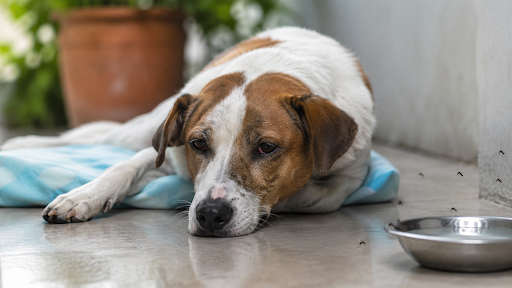
With the increase in arbovirus cases in Brazil, it's natural that questions arise about the safety of our four-legged companions. After all, if the Aedes aegypti mosquito is everywhere, can dogs get dengue fever? This is one of the most frequent questions in veterinary clinics during periods of heat and rain. The concern is legitimate, as animal welfare depends directly on our ability to identify risks in the environment.
Although humans suffer from high fever, body aches, and other severe symptoms, the scenario for dogs is different. However, this does not mean they are free from dangers transmitted by insect bites. Understanding the relationship between the virus and animals is the first step towards efficient and worry-free preventative pet health .
In this article, we'll explore in depth whether dogs can get dengue fever , what diseases actually pose a risk through mosquitoes, and how you can keep your home safe for all family members, including your furry friends.
Myths and truths: can dogs get dengue fever?
The short and direct answer to the question " can dogs get dengue fever? " is no. According to scientific studies and animal health organizations, dogs do not develop clinical dengue fever. The dengue virus is highly adapted to humans and some primates, and is unable to replicate in a way that causes symptoms in canines.
Even if an infected mosquito bites your dog, the animal's body does not allow the virus to spread. Therefore, you don't need to worry about your pet showing the red spots or hemorrhagic fever typical of the disease in humans. However, the question " can dogs get dengue? " opens the door to a much more important warning: the same mosquito that transmits dengue can carry other pathogens that are dangerous to pets.
It is crucial not to confuse immunity to dengue fever with immunity to mosquito bites. Aedes aegypti and other mosquitoes, such as Culex , are vectors of serious diseases that require increased vigilance from pet owners.
The real dangers: mosquito-borne diseases
If we've already clarified that dogs can get dengue fever, it's not a clinical possibility. We need to talk about what can actually happen. The biggest threat to dogs when it comes to mosquitoes is Dirofilariasis, popularly known as heartworm.
Unlike dengue fever, Dirofilariasis is a silent and potentially fatal disease in dogs . The mosquito bites the animal and transmits larvae that settle in the pulmonary arteries and heart, growing to considerable sizes. Dogs don't show symptoms of dengue fever , but signs of heartworm include coughing, easy fatigue, and difficulty breathing.
Furthermore, we cannot forget about canine leishmaniasis , transmitted by the sand fly. This is a very serious zoonotic disease that affects the animal's internal organs and skin. While the owner wonders if their dog can get dengue fever , the focus should be on preventing mosquitoes in pets in a broad sense, protecting them against these real threats.
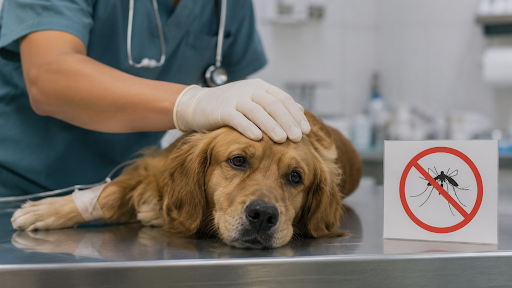
Differentiating symptoms: dengue vs. other diseases
Often, pet owners notice their animal is lethargic and, due to the outbreak in the city, wonder again: " Can dogs get dengue fever? ". In fact, the pet may be suffering from something completely different, such as canine ehrlichiosis .
The confusion arises because some clinical signs are similar to the human symptoms of arboviruses:
Fever and lethargy;
Lack of appetite;
Lethargy.
These signs are common in tick-borne diseases . If you want to know if tick-borne diseases are curable , the answer is yes, provided it is diagnosed early. Therefore, when noticing any change in behavior, it is best to consult a veterinarian instead of assuming that the dog has dengue fever.
Pet care in the summer and effective prevention.
Summer is the critical season for the proliferation of vectors. Mosquito prevention in pets should be taken as seriously as our own protection. Keeping the environment clean and free of standing water is basic, but there are specific measures for animals.
Here are some practical tips for caring for pets in the summer:
Protective screens: Install screens on windows and doors to prevent insects from entering;
Specific repellents: Never use human repellents on dogs. There are veterinary products, such as collars, sprays, and pipettes, that repel mosquitoes;
Walking times: Avoid walking at dawn and dusk, times when mosquitoes are most active;
Cleaning the bowls: Change your pet's water several times a day and wash the bowl with a sponge and soap to eliminate mosquito eggs.
Remember that an obese dog , one with high inbreeding , or one with poor health may have a slower immune response to any canine disease . Maintaining an ideal weight and proper nutrition is an essential part of protection.
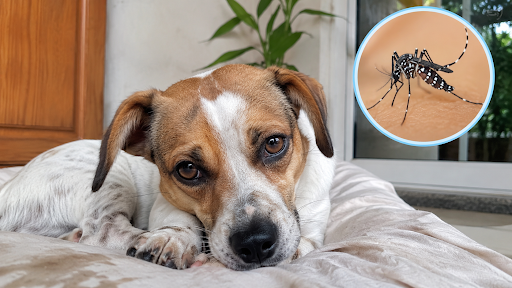
The importance of genetic knowledge in protection
Did you know that genetics can influence how your pet's body reacts to infections and even the effectiveness of certain preventative medications? Although the question " can dogs get dengue fever? " has a negative answer, predisposition to other diseases is something that can be mapped.
By understanding the characteristics of the dog breeds that make up your friend, you can anticipate necessary care. For example, some breeds are more sensitive to components of repellents or deworming medications. Is genetic testing worthwhile for my dog? Absolutely, as it provides a map of your pet's health, allowing for much more personalized medicine.
Learn more about preventative care on our blog:

Preventive health with petgenoma
In short, while concern about whether dogs can get dengue fever is common, the direct risk of the dengue virus to pets is nonexistent. However, the Aedes aegypti mosquito and other vectors pose real threats such as heartworm and leishmaniasis, which require constant vigilance. The best way to care for those we love is through information and personalized prevention. petgenoma offers advanced genetic tests that help you deeply understand your companion's health and ancestry, ensuring a longer and safer life. Located at Av. Prof. Lineu Prestes, 2242 - Room 25 - Cidade Universitária, São Paulo SP , our team is ready to transform the care of your animal through science. Follow our daily tips and curiosities about the world of animal genetics by following our profile @petgenomabr .
Essay
Petgenoma



