Maine Coon: Purebred vs. Mixed Breed: What DNA Reveals
02/06/2026
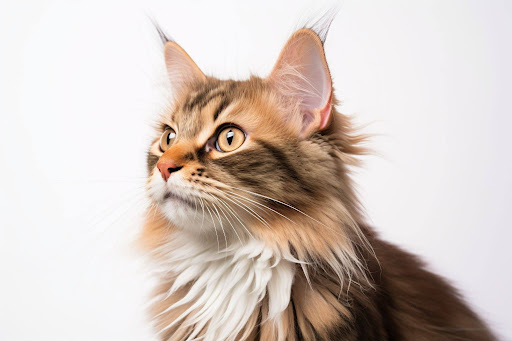
Have you ever wondered if that "gentle giant" sharing your couch is truly a purebred Maine Coon ? This is a very common question among pet owners who adopt or buy animals that exhibit the breed's distinctive characteristics but lack official registration. Understanding your four-legged friend's origins goes far beyond mere curiosity; it's a fundamental step in providing them with a long and healthy life.
Modern genetics has provided answers that were previously impossible to obtain simply by observing behavior or coat color. Today, science allows any pet owner to know exactly what their animal's genetic makeup is, differentiating a purebred specimen from a mixed breed with absolute precision. Understanding this distinction helps in planning specific veterinary care and in better understanding your feline's personality.
In this guide, we'll explore how genetic mapping technology can shed light on the dilemma between purebred and mixed-breed Maine Coons , and why this information is a game-changer for your pet's well-being.
The fascination with Maine Coon cats and the dilemma of purity.
The Maine Coon is often called the "gentle giant" due to its impressive size and extremely docile temperament. Originating in the United States, it has conquered the world not only for its imposing presence, but also for its intelligence and ability to interact with humans. However, the breed's popularity has also led to an increase in the number of animals that "appear" to belong to the lineage, but may have mixed origins.
Often, an owner believes they have a purebred cat based solely on physical appearance, but feline breed identification reveals surprises. A cat can have 50% of its breed's genetic makeup and still exhibit all the dominant visual traits. This is where knowledge of pet pedigree becomes essential for those who desire excellence in care.
Characteristics of the Maine Coon: how to physically identify them?
There are certain characteristics of the Maine Coon that are almost unmistakable. The body is long, muscular, and has a heavy bone structure. The tail is thick and feathery, resembling that of a raccoon—which gave rise to part of its name. Another iconic trait is the "lynx tips," those tufts of hair at the tips of the ears that are reminiscent of wild lynxes.
Besides appearance, behavior is also a clue. This giant cat is usually very vocal, emitting sounds that resemble trills or warbles, and has an unusual fascination with water. If you have doubts about your companion's origin, the first step is to observe these details, but remember: appearance is just the tip of the iceberg. To understand what's "under the hood," you need to look at the molecules.
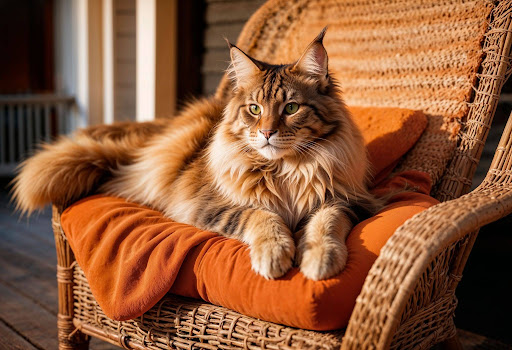
Purebred Maine Coon vs. mixed breed: can appearances be deceiving?
Visually distinguishing between a purebred Maine Coon and a mixed-breed Maine Coon can be extremely difficult, even for experts. Many mixed-breed cats can bear an incredible resemblance to purebreds, leading owners to make mistakes.
The main difference, however, lies in predictability. A purebred animal tends to follow a more rigid pattern of inherited health and behavior. A mixed-breed animal, on the other hand, has greater genetic variability, making it difficult to anticipate specific medical needs. Without a breed composition test , the owner is left only with guesswork.
Why is DNA testing for cats the only real proof?
If you want to stop guessing and start knowing, DNA testing for cats is the ultimate tool. Through a simple saliva sample, it's possible to analyze thousands of genetic markers that make up your pet's genome. This process allows for precise breed identification by comparing your cat's genetic code with global databases of purebreds.
In addition to confirming the breed, pet DNA analysis offers a complete overview of ancestry. You can discover, for example, that your cat has a significant percentage of other cat breeds that influence its metabolism or predisposition to diseases. It's applied science transforming curiosity into preventative care.
Maine Coon health and the importance of prevention.
The health of a Maine Coon is a point that deserves special attention. Like all selectively bred breeds, they have genetic predispositions to certain conditions, such as Hypertrophic Cardiomyopathy (HCM), a serious heart disease. Knowing if your cat carries these mutations is vital to starting preventative treatments or routine adjustments before symptoms even appear.
There are excellent reasons to have genetic testing done on cats , and the prevention of hereditary diseases is the main one. In addition to cardiac issues, mapping can identify risks for kidney and joint problems, common in large animals. Having this information allows you and your veterinarian to create a personalized health plan, ensuring your giant cat lives a healthy life for many years.
How pet genetics transforms cat care.
Understanding your feline's genetics changes how you view nutrition, exercise, and even your home environment. A purebred Maine Coon , for example, has different nutritional needs than a medium-sized cat to prevent it from becoming obese , which would overload its joints.
Knowing the exact origin also helps in the differential diagnosis of common diseases. If your pet has skin problems, knowing the breed composition helps to rule out or confirm whether it is something genetic or an external condition, such as mange in cats or even sporotrichosis in cats , which require different treatments. Even immunity can be better understood, preventing complications in cases of FIV in cats .
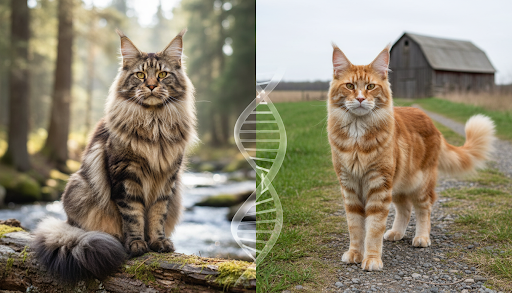
Myths and truths about animal DNA
To help you on your journey of discovery, we've listed some essential points that every Maine Coon owner should know:
Does a pedigree replace a DNA test? No. A pedigree is a historical record, while animal DNA reveals the current biological reality and hidden health risks.
Are mixed-breed cats healthier? Not always. While genetic diversity is good, a mixed-breed cat can inherit the worst traits of two lineages if there is no monitoring.
Is it difficult to know the breed of an adopted cat? With current technology, it's very simple. If you have doubts, see how to find out your cat's breed through accessible tests.

Invest in the future of your giant with petgenoma.
Understanding your feline's genetics in depth is the greatest act of love and responsibility a pet owner can have, as it allows you to anticipate needs and ensure a full life. petgenoma offers the most advanced tests on the market so you can discover everything about your companion's origin and health, sending the kit directly to your home anywhere in Brazil. If you prefer in-person service or want to learn more about our technology, we are located at Av. Prof. Lineu Prestes, 2242 - Room 25 - Cidade Universitária, São Paulo SP . Also follow our genetic tips and curiosities by following the profile @petgenomabr to stay up-to-date on all the innovations in the pet world.
Essay
Petgenoma



