Heartworm transmission in dogs: understand how your pet gets infected.
27/01/2026
Index
Introduction
The main question many pet owners have is how such a serious disease can develop so silently. Heartworm in dogs , or dirofilariasis, depends on a specific biological cycle to spread. Understanding in detail how this transmission occurs is the first step to ensuring effective protection for your best friend.
What is heartworm in dogs?
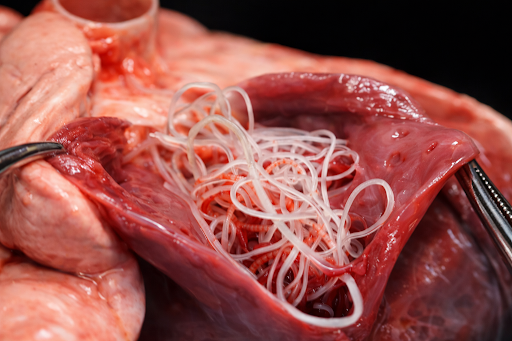
Caused by the parasite Dirofilaria immitis , this disease is characterized by the lodging of worms in the pulmonary arteries and heart of the animal. Although the damage occurs in these organs, the origin of the problem lies in an external vector that transports the parasite from one animal to another.
The transmission cycle: from mosquito to heart
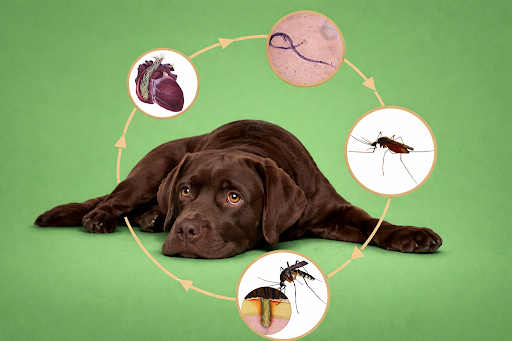
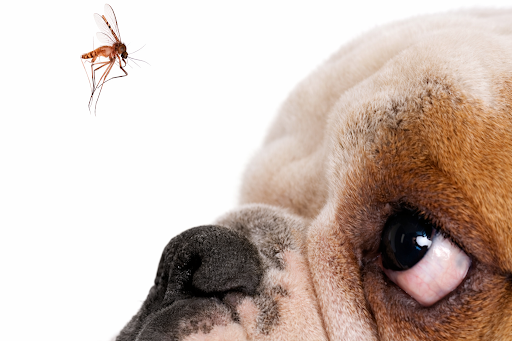
Unlike other parasitic infections, heartworm in dogs is not transmitted through direct contact between dogs, feces, or contaminated food. Transmission occurs exclusively through the bite of infected mosquitoes.
The Infectious Bite : The mosquito (of the genera Culex , Aedes , or Anopheles ) bites an animal that already has the disease and ingests the microfilariae (young larvae) present in its blood.
Development in the Mosquito : Inside the mosquito, the larvae undergo maturation until they become infective.
Inoculation in a Healthy Dog : When a mosquito bites a healthy dog, it transmits these larvae to the animal's subcutaneous tissue.
Environmental factors that facilitate propagation
The incidence of heartworm in dogs is directly linked to the presence of mosquitoes. Therefore, the disease is significantly more common in hot, humid, and coastal regions, where the climate favors the reproduction of these insects year-round. However, with climate change and the movement of animals between cities, dogs in urban areas are also at constant risk.
The silent journey of larvae in the body
After being bitten, the larvae begin a migration through the body that can last for months. They cross the tissues until they reach the bloodstream, where they are carried to the heart and lungs to complete their development into adulthood. This process is silent, and symptoms usually only appear when the worms are large enough to obstruct blood flow.
How to interrupt the transmission cycle
The best combat strategy is to prevent the cycle from completing. This can be done in two complementary ways:
Repellents : The use of collars or topical products that repel mosquitoes.
Chemoprophylaxis : The use of preventive medications that eliminate the larvae soon after the bite, preventing them from reaching the heart.
Personalized prevention and medication safety
While prevention is key, caution is necessary. Some preventative medications for heartworm in dogs can be dangerous for dogs with genetic sensitivities (such as the MDR1 gene mutation).
In this scenario, petgenoma offers genetic tests that help identify these predispositions, allowing the veterinarian to choose the safest and most effective preventive protocol for your dog's specific profile.
Learn more at: Personalized Medicine: Did you know that some medications can be very dangerous to your dog's health?
Personalized prevention for your pet.
petgenoma uses genetic testing to help pet owners understand health predispositions, immune responses, and factors that can influence the progression of diseases. Although heartworm in dogs is prevented with specific medications, knowing the pet's genetic profile contributes to a more comprehensive approach to care, prevention, and longevity.

Related content for further exploration of the topic.
To expand your knowledge about diseases and prevention in dogs, these blog posts complement the topic:
Is tick-borne disease curable? Understand the risks, symptoms, treatment, and prevention.
Canine distemper: symptoms, prevention, and how to protect your dog.
Parvovirus: symptoms, prevention, and how to protect your pet.
These articles reinforce the importance of preventive medicine.
Conclusion
Understanding the transmission of heartworm in dogs reveals the importance of ongoing protection. Because it depends on a mosquito, no dog is completely free from exposure, but all can be protected with the right strategy.
To learn more about how genetics can help improve your pet's health, follow petgenoma on Instagram @petgenomabr .
Essay
Petgenoma



