Dermatitis in dogs: a complete guide to signs and care.
04/03/2026

Seeing your best friend constantly showing discomfort is a worrying situation for any pet owner. Skin health is one of the pillars of animal well-being, but unfortunately, dermatological problems are among the most common complaints in veterinary clinics. When we talk about dermatitis in dogs , we are not referring to a single disease, but to a set of inflammations that can have various origins.
Identifying the early signs is crucial to preventing a simple irritation from turning into a serious wound or secondary infection. Furthermore, understanding that genetics plays a crucial role in skin health helps in developing much more effective prevention strategies. In this guide, we will explore how to recognize, treat, and prevent this problem that affects so many households.
What is dermatitis in dogs and why is it so bothersome?
Dermatitis , in simple terms, is an inflammation of the animal's skin. It occurs when the skin barrier, which should protect the body against external agents, is weakened or overreacts to some stimulus. This condition causes a vicious cycle: the skin becomes inflamed, the dog scratches or licks itself, which increases the lesion and opens the door to bacteria and fungi. In many cases, local or generalized hair loss (alopecia) also occurs.
Unlike sporadic itching, canine dermatitis usually presents with persistence that alters the pet's behavior. The pet may become more restless, irritable, or even apathetic due to the constant discomfort. Therefore, observing how often the animal seeks to relieve the itching is the first step towards an accurate diagnosis.
Main warning signs and symptoms
Many times, pet owners confuse skin allergies in dogs with the presence of parasites. Although fleas and ticks are common causes, dermatitis symptoms can appear even in animals with up-to-date ectoparasite control. Pay attention to the following signs:
Intense redness: The skin often shows pink or red spots, especially on the belly, paws, and ears.
Incessant itching: The pet uses its paws, teeth, and even rubs itself against furniture to try to relieve the itching in dogs.
Hair loss (alopecia): Patches of hair loss may appear, either localized or generalized.
Strong odor: In cases of fungal or bacterial infections, the skin gives off a sweeter or rancid smell.
Peeling and crusting: The presence of "scabs" or peeling skin resembling dandruff.
Excessive licking: Especially on the paws, which can leave the fur with a brownish color due to saliva.
In addition to these issues, inflammation commonly extends to the ears, resulting in frequent cases of canine otitis , which causes pain and constant head shaking.
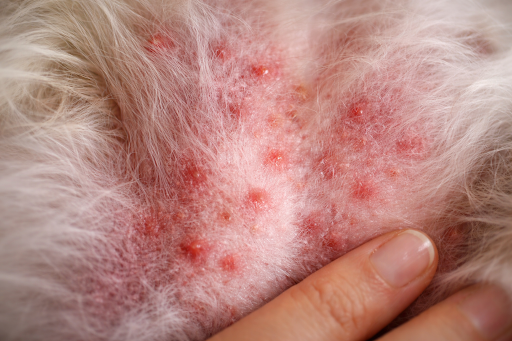
Common causes of irritated skin in dogs
There are several factors that can trigger dermatitis in your pet . Knowing the origin is essential so that treatment is not just palliative, but focused on the root cause. Among the main ones are:
Atopic Dermatitis: A genetic predisposition in which the animal reacts to environmental allergens, such as pollen, dust mites, and mold, among other agents.
Flea Allergy Dermatitis (FAD): Just one bite is enough for a dog's immune system to react intensely.
Food Allergy: Reactions to specific components of the diet, such as certain proteins or dyes.
Infectious Agents: Fungi and bacteria that take advantage of weakened skin to proliferate. In some cases, the owner may confuse it with canine mange , which requires specific treatment.
The influence of genetics on canine skin health.
Did you know that your pet's breed can tell you a lot about their risk of developing skin problems? Science shows that canine skin health is directly linked to genetic inheritance. Some breeds, such as the French Bulldog, Golden Retriever, Shih Tzu, and West Highland White Terrier, have a documented predisposition to atopic dermatitis, for example.
Understanding your dog's breed composition , especially in mixed-breed dogs, allows owners and veterinarians to anticipate problems. Furthermore, consanguinity analysis can reveal a higher probability of autoimmune diseases or hypersensitivities affecting the skin, such as allergies that cause dermatitis.
Diagnosing dermatitis and how to help your pet.
A diagnosis of dermatitis should always be made by a veterinarian. The professional may request skin scrapings, cytology, or allergy tests. However, the animal's history is the most important piece of the puzzle:
Keep a diary: Note when the itching gets worse (after a walk, after eating something different, or at certain times of the year).
Beware of self-medication: Applying ointments or bathing with unsuitable products can mask symptoms and worsen irritated skin in dogs.
Preventive check-up: Systemic problems can manifest on the skin. Serious diseases, such as canine leishmaniasis , also present significant dermatological symptoms.
According to the World Small Animal Veterinary Association (WSAVA) , multimodal management—which combines environmental control, diet, and medication—is key to successful long-term treatment.
Prevention and routine care
Preventing canine dermatitis involves maintaining high immunity and a strengthened skin barrier. A balanced diet is vital, as nutrients like Omega 3 and 6 help maintain the skin's natural hydration. It's important to know which foods to offer; for example, checking if the dog can eat apples or bananas can help vary the diet safely and healthily.
Another key point is weight control. Canine obesity creates skin folds that accumulate moisture and heat, a perfect environment for fungal growth. Furthermore, keeping vaccinations up-to-date against diseases like distemper ensures that the immune system is not overwhelmed by other problems.
To complement your reading on health and prevention, check out these articles:
Conclusion: Ensure a better quality of life with petgenoma.
Caring for dermatitis in dogs requires patience and, above all, quality information. By understanding that each animal is unique and that its genetics dictates the rules of its health, you become a much more prepared owner to offer your companion a long and itch-free life. petgenoma specializes in translating pets' DNA into practical guidelines for excellent preventive medicine, helping you anticipate risks and personalize care. We are located at Avenida Professor Lineu Prestes, 2242 São Paulo SP and ready to help you understand every detail of your friend. Follow our Instagram profile @petgenomabr for more scientific and affectionate tips about the pet world. Visit the petgenoma website and discover what your pet's DNA reveals.
Essay
Petgenoma



